


TL;DR
- Petit Planet is set to launch in winter 2026 on PC, iOS, and Android, with cross-play and cloud saves confirmed.
- The game features a unique resource loop centered around the Luca Arbor, encouraging players to interact with their Neighbors' worlds.
- Monetization will focus on cosmetics, with no character or weapon gacha mechanics, shifting away from HoYoverse's traditional model.
Disclaimer: This summary was created using Artificial Intelligence (AI)
Petit Planet is HoYoverse’s first cozy life sim, and after two closed betas and a Gamescom 2026 booth, we finally have enough on the table to talk about how the economy, the Neighbor system and the monetization model actually hold up.
And here, our breakdown focuses on core mechanics, resource loops, and key beta elements for hardcore simulation players: daily task efficiency, Luca Arbor progression gates, and the long-term viability of a cosmetic-first monetization model for a live-service title.
See also: Clash of Clans MOD APK: Infinite Gems, Private Servers, & Risk
Petit Planet Release Date and Platforms
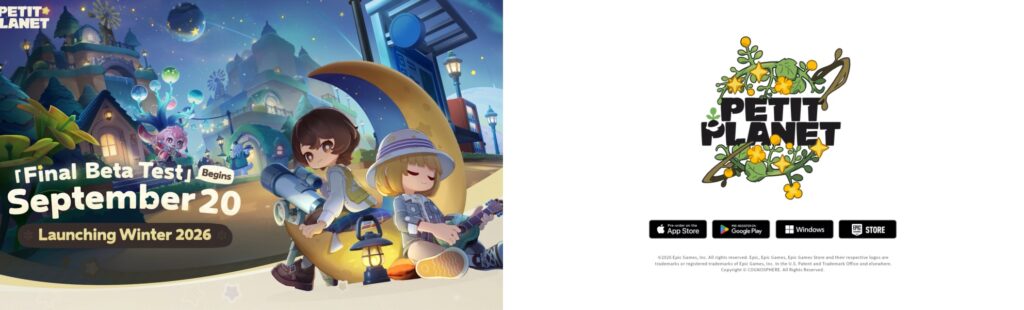
HoYoverse announced Petit Planet in late September 2025, with the first trailer landing around September 24 to 27. The Coziness Test, the first closed beta, ran from November 7 to roughly December 1, 2025.

The Stardrift Test followed from April 21 to May 25, 2026, adding new Neighbors, more Starsea Voyage content, and additional Galactic Bazaar activities.
The Final Beta Test opens September 20, 2026. Sign-ups run through September 14 at 00:00 UTC+8 on the official site, slots are limited, and the test wipes save data with no in-game purchases.
HoYoverse used Gamescom 2026 (August 26 to 30, with a playable booth in Hall 6.1, B030) to confirm a winter 2026 full launch.
We’d note that the winter 2026 window comes from HoYoverse’s own promotional materials around the show; independent outlets hadn’t locked a firm calendar date at the time of writing, so treat it as the studio’s stated target rather than a confirmed release day.
At launch, Petit Planet is confirmed for Windows PC (its own client plus the Epic Games Store), iOS, and Android, with cross-play and cloud saves between PC and mobile.
The game is always online, and HoYoverse says additional platforms are in development. An ESRB rating for Nintendo Switch 2 surfaced in mid-2026, rated E for Everyone with in-game purchases including random items, which points to a console version down the line, though HoYoverse hasn’t officially confirmed Switch 2.
The game runs on Unity, and leaker Ubatcha said in early 2026 that development had entered its final stages, which lines up with the winter 2026 target.
See Also: The Witcher 3 Remastered: Everything We Know Before Launch
Petit Planet Gameplay: What You Do
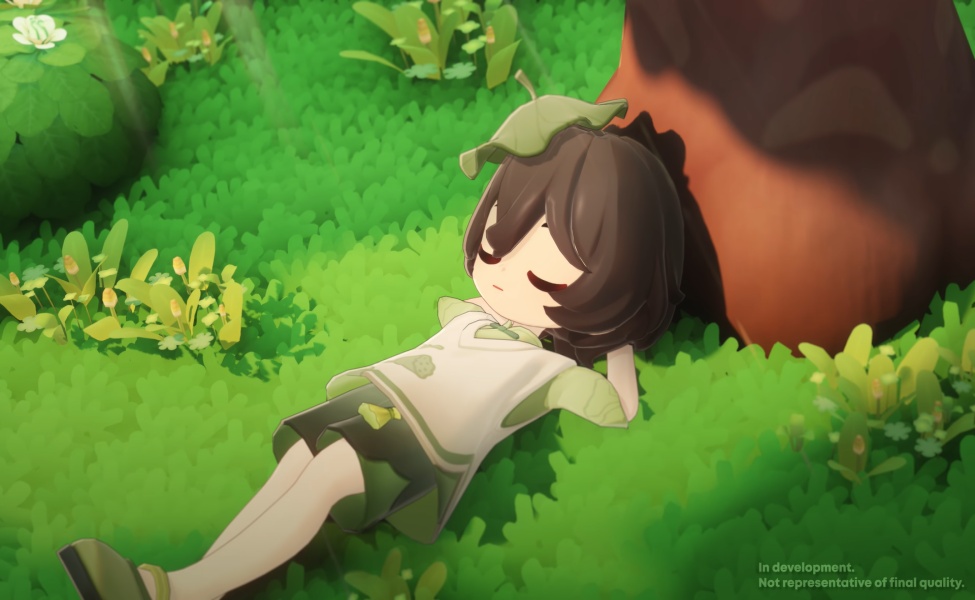
You start by picking a galaxy: Taffeh (hot, dry, golden prairies) or Hexia (warm, humid, verdant plains). From there, the entire early game revolves around the Luca Arbor, the tree at the center of your planet.
You collect Luca from quests and daily activities, water the tree, and rank it up to unlock more land, rivers, beaches, mountains, and crop fields.
Higher ranks also need Neighbor Luca Fruits, which you only get by helping other Neighbors’ worlds, so the progression loop pushes you outward instead of letting you sit on one plot forever.
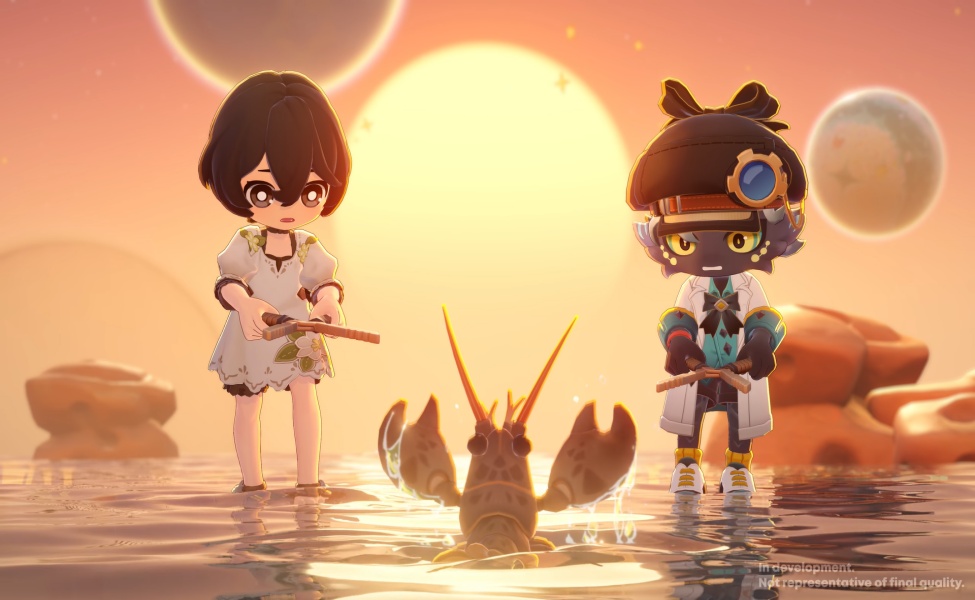
Day to day, you’re farming crops, fishing, catching bugs with a net (or shooting stars), shaking trees for fruit, mining ore, and beachcombing with tongs, a small touch that testers singled out as one of the more distinct additions over the usual cozy-sim toolkit.
Cooking, furniture crafting, terraforming, and decorating both your house and the wider planet round out the loop, and everything you collect feeds the Omni-Gallery, the game’s museum system.
Time runs in real time, and some goals need multiple real days to finish, so this plays like a daily check-in game more than a marathon session.
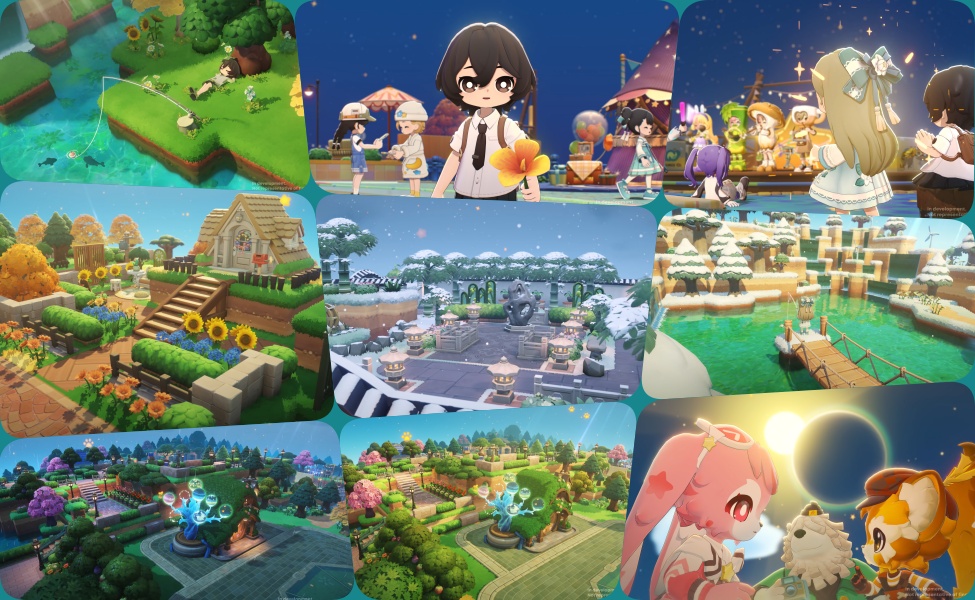
Four currencies run the economy: Dough (earned from selling crops, fish, and cooked food, spent at Glenn’s shop), Loomi (from daily tasks, spent at Lumi Mart on cosmetics and styles),
MiraiLoomi (the premium currency), and the Curio Card, which works as a seasonal battle pass. Archiboos, little helper characters, get sent to Neighbors’ planets to grow their worlds and deepen friendship, with different colors tied to different activities like mining or cooking.
Exploration works through vehicle trips with up to two Neighbors into the Starsea, where you hit Islets for rare resources and encounters. Your Neighbors auto-gather based on their skills while you grab chests and Luca drops yourself, which cuts down on some of the tedium.
Customization runs deep across your avatar, house, and outdoor layout, but the decoration grid in both betas was fairly rigid, and that’s the one complaint that keeps coming up from players who want tighter control over placement and rotation.
See also: Poppo Live Earning Guide 2026: Coins, Points & Payouts
The Neighbors: Petit Planet’s Animal Cast
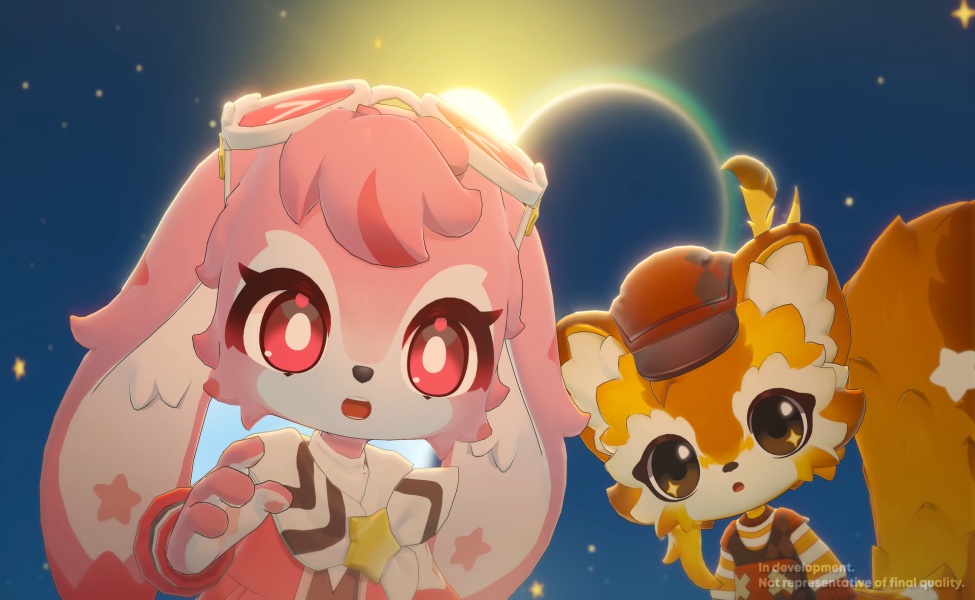
Neighbors are the anthropomorphic animal cast, each with a job, a home galaxy, a birthday, daily gifts, and a friendship questline. You start with three Loomi Co staff members: Mobai, Glenn, and Esassani.
| Neighbor | Role |
|---|---|
| Mobai | Life Coordinator (the Isabelle and Tom Nook stand-in, minus the loans) |
| Glenn | Shopkeeper |
| Esassani | Starsea Racer |
| Yunguo | Cultivator |
| Isaki | Battle Beetle Trainer |
| Medowlyn | Plushie Designer |
| Frostia | Mystic Scholar |
| Dorjelang | Hatmaker |
| Mors | Omni-Gallery Curator |
| Msafiri | Adventure Guide |
| Harpeno | Starsea Patrol Officer |
| Rebella | Gemsmith |
| Nerina | Composer |
| Manna | Action Actor |
| Tika | Agriculture Student |
| Heyu | Hot Spring Innkeeper |
Tala, Tata, and Trixie have shown up in datamines as possible future additions. Nalo, the AI chatbot at Cafe Untamed in the multiplayer hub, is worth calling out separately: it’s an NPC feature, not a recruitable Neighbor, and it’s already drawn some of the sharpest early criticism from testers who found the AI-generated dialogue out of place next to the hand-written Neighbor stories.
See Also: Gamescom 2026: ONL Recap, Dates and Show Floor
Multiplayer and Social Features
This is where Petit Planet pulls furthest from the Animal Crossing formula it borrows from. The Galactic Bazaar works as a shared social hub with coffee, a bonfire, fortune-telling, dancing, auctions, and rhythm and word minigames.
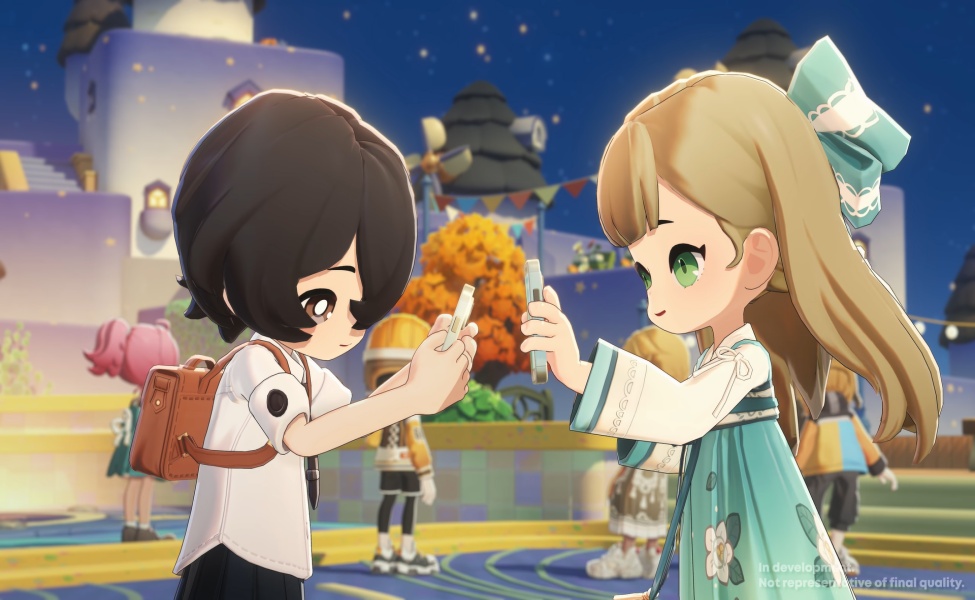
You can visit other players’ planets (they show up in your own sky), take Starsea trips together, and the whole system runs cross-platform.
The catch is that both closed betas felt quiet on the social side, mostly because the player pools were small and time-limited.
The systems are built for a much bigger population than either test could actually deliver, so the real test of the Bazaar and co-op Starsea runs comes with the Final Beta and, more importantly, after launch.
See also: Pokemon 30th Anniversary 2026: The Full Year Breakdown
Monetization: What Betas Actually Showed
This is the part that surprised a lot of HoYoverse’s existing player base. Neither the Coziness Test nor the Stardrift Test included character or weapon gacha banners of the kind Genshin Impact or Honkai Star Rail run on.
Instead, monetization in both betas leaned on a direct cosmetic shop for outfits, furniture, and hair or eye options that rotates on a schedule, a Curio Emporium for seasonal collections priced in MiraiLoomi, the Curio Card battle pass, Loomix apparel mystery boxes as a smaller randomized system for clothing, and random pickups from shooting stars or drifting objects you find while exploring.
You can earn MiraiLoomi through regular play, and you can also buy it directly. The ESRB listing does note in-game purchases including random items, which covers the mystery box system.
HoYoverse hasn’t locked the final monetization model, and there’s room for the studio to add systems before or after launch, but everything shown so far points to a cosmetics-first structure rather than the power-gacha approach the company is known for.
If that holds at launch, it changes the daily-efficiency math considerably: there’s no pity to save for on a character banner, so your MiraiLoomi budget goes entirely toward the Curio Emporium rotation and whatever the seasonal Curio Card track is selling.
See Also: 7DS Origin Weapon Tier List: SS to B Ranked (Aug 2026)
How It Feels, According to People Who Played It
Previews from IGN, GameSpot, PC Gamer, VG247, and GosuGamers after five to fifteen-plus hours of hands-on time landed on a pretty consistent set of impressions.
On the positive side, testers pointed to the art direction and the rounded, starry visual identity, a clearer sense of directed progression than base Animal Crossing thanks to the Luca Arbor and quest log, strong Neighbor writing and Little Prince atmosphere, and the added layer that space travel and the Bazaar bring that Animal Crossing doesn’t have.
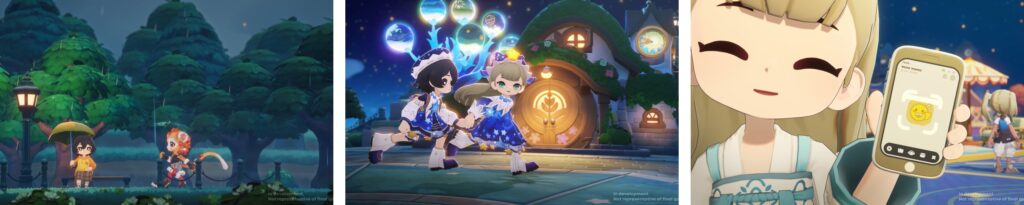
HoYoverse has also leaned into the “no loans” joke about ditching Tom Nook’s debt system, which landed well with players who know the reference.
The criticism clusters around three points. First, the opening hours read as very close to Animal Crossing beat for beat, closer to familiar than original. Second, the quest structure carries more of a mobile checklist feel than the aimless wandering that defines Animal Crossing’s pacing, which some testers found less relaxing.
Third, early-beta text showed signs of AI generation, and the Nalo chatbot NPC drew specific pushback for feeling out of place. The rigid decoration grid came up again here too.
The overall read across outlets: not a reinvention of the cozy genre, but a polished, good-looking entry that could work as a strong free-to-play alternative if the live-service event cadence and social features actually deliver once the game is live and the player base is large enough to fill the Bazaar.
Controversy: Little Planet (VR)
In November 2025, VRWOOD, the developer behind the VR game Little Planet (which entered early access in November 2023), said Petit Planet showed “striking similarities” in name, small-planet setting, feature set, and even the shared Little Prince inspiration, and stated they were exploring options to protect their IP.
Petit Planet’s US trademark filing dates to October 2024, and USPTO materials note that “petit” is French for “little.” No public lawsuit outcome has come out of this since the initial statement, and both games currently exist side by side in the same small-planet cozy niche.
See Also: Where Winds Meet Weapon Tier List: PvE & PvP (2.1)
With its gacha-free model, central social hub, and a Luca Arbor system that incentivizes visiting other worlds, Petit Planet offers a distinct twist on a familiar cozy loop.
The open question is how that formula holds up once the Final Beta opens on September 20 and the servers fill with a real player base, and that’s the thing to watch heading into winter 2026.
Are you planning to apply for the Final Beta before the September 14 deadline? Share your preferred starting galaxy and initial Luca Arbor focus in the comment section below.
Tell us about your strategy for optimizing grid layout, how managing your MiraiLoomi budget with a cosmetics-focused store differs from traditional HoYoverse gacha pity planning, and your perspective on how the Little Planet VR conflict could influence the broader small-planet genre moving forward.
FAQs
Petit Planet is confirmed for multiple platforms, with HoYoverse showcasing the game at Gamescom 2026. Specific platform details were revealed alongside the release date announcement.
The Neighbor system is a core social mechanic that allows players to interact with and build relationships with other characters in the game world. It ties directly into resource loops and progression, making it central to the overall gameplay experience.
Petit Planet uses a monetization model that has been observed across two closed betas, giving players and analysts a clearer picture of how it holds up. HoYoverse has structured it around the game's economy and resource systems.
TL;DR
- Petit Planet is set to launch in winter 2026 on PC, iOS, and Android, with cross-play and cloud saves confirmed.
- The game features a unique resource loop centered around the Luca Arbor, encouraging players to interact with their Neighbors' worlds.
- Monetization will focus on cosmetics, with no character or weapon gacha mechanics, shifting away from HoYoverse's traditional model.


1 Comment
Pingback: Blood of the Dawnwalker Release Date, Price & Full Gameplay