


TL;DR
- Valheim 1.0 launched on September 9, 2026, introducing the Deep North biome, over 40 new weapons, and four armor sets, with a price increase to $29.99.
- Crossplay is supported across all platforms, but cross-saves are limited to Xbox and Microsoft Store PC, necessitating careful platform choice for players.
- The Deep North biome features glacial peaks and frozen tundra, requiring players to adapt to cold mechanics, and includes a new crafting loop for powerful Nord weapons.
- Valheim 1.0 is not a live-service relaunch nor an ocean update; it aims to finalize the Early Access experience with future content remaining open-ended.
Disclaimer: This summary was created using Artificial Intelligence (AI)
Valheim 1.0 shipped on September 9, 2026, and it closes a map that has had three blank spaces on it since launch day in 2021.
Iron Gate spent five years filling in Mistlands, Ashlands, and now Deep North, and the last update landed with a price change, a full weapon line, and console support that finally matches the PC version.
Here is what actually changed, biome by biome and system by system.
See also: Stellar Blade Complete Edition on Switch 2: Date, Price & Extras
The Valheim 1.0 Launch Specs: Date, Price, and Platforms

Valheim 1.0 went live around 12:55 UTC on September 9, 2026 (5:55 a.m. Pacific), on one build across every store: Steam on Windows, Linux, and Mac, the Microsoft Store, the Mac App Store, Humble, Xbox One, Xbox Series X|S, PlayStation 5, and Nintendo Switch 2.

Crossplay works everywhere on day one. Cross-saves only carry over between Xbox and Microsoft Store PC. Everyone else is stuck with local saves, so plan your platform before you sink 40 hours into a new file.
The price moved to $29.99. It had sat at $19.99 since February 2021, and anyone who already owned the game paid nothing extra. There is still just one edition. Either no deluxe bundle, no season pass, or not even a paid biome pack.
The soundtrack is a separate purchase if you want the score outside the game. Game Pass is not part of the launch.
Download sizes land around 4.3 GiB on most storefronts, closer to 3.0 GiB on Xbox One, and around 6.5 GiB on the Mac App Store and Microsoft Store.
The PC requirements moved with the engine update: Windows 10 64-bit, a quad-core CPU at 2.6 GHz, 8 GB of RAM, and a GTX 950 on the floor; an i5 or Ryzen 5 at 3 GHz, 16 GB, and a GTX 1060 or RX 580 for the recommended spec.
Steam Deck keeps its Verified badge, and big bases still lean harder on CPU and RAM than on the GPU.
Iron Gate’s own FAQ answers the questions people will ask in the first week. Old worlds keep working, but new biome generation only fills in chunks you have not explored yet, so a fully sailed map will not grow a clean Deep North out of nowhere.
Achievements start tracking from the 1.0 install, not from anything you did in 2021 or 2023. Console commands flag both your character and the world.
Mods will break on update day and come back on their own schedule, since there is no official Workshop and there was no public test branch for 1.0. Iron Gate wanted everyone walking into the snow at the same time.
See Also: Poppo Live Earning Guide 2026: Coins, Points & Payouts
Early Access Was Not a Beta, It Was the Whole Middle of the Story
Valheim launched on February 2, 2021 with Meadows through Plains, five bosses, and a map that already had empty shapes labeled Mistlands, Ashlands, and Deep North.

Five people built that first release. It sold a million copies in eight days, five million in a month, and hit a 502,000 concurrent peak on Steam almost immediately.
The public roadmap got pulled not long after, once the team realized keeping the servers standing was a full-time job on its own.
Here is what actually got built in the years between, based on Iron Gate’s own later timeline:
| Period | What shipped |
|---|---|
| Feb to Apr 2021 | Emergency stability work |
| May to Sep 2021 | Hearth and Home (food, stamina, homesteading) |
| Late 2021 to early 2022 | Abomination, Frost Caves |
| Most of 2022 | Mistlands (Dec 6, 2022) |
| 2023 | Xbox port (Mar 14), Hildir’s Request (Aug 22) |
| Jan 2023 to May 2024 | Ashlands built in parallel |
| May 2024 | Ashlands live |
| Oct 29, 2024 | Bog Witch |
| Oct 2024 to Aug 2025 | Deep North and Call to Arms in parallel |
| Sep 9, 2025 | Call to Arms (adrenaline, trinkets, dodge rewrite, bears) |
| Aug 2025 to Sep 2026 | Deep North finished |
| Jun 7, 2026 | 1.0 date announced at PC Gaming Show |
| Sep 9, 2026 | 1.0 launch |
That timeline explains why every biome felt like a new game bolted onto the old one instead of a patch. Mistlands brought magic.
Ashlands brought a war. Call to Arms rebuilt how combat feels in your hands. Deep North closes the last chapter that was already drawn on the map back in 2021.
The ocean still has not gotten its own pass, and Iron Gate says so directly in the FAQ, so anyone who has lost a boat full of iron to a sea serpent still has a right to be annoyed.

The numbers by launch day: over 17 million copies sold, a Steam rating still sitting around 94 percent positive, and an average playtime past 100 hours. Review scores for 1.0 opened in the 90s, with a couple of perfect scores mixed in.
Launch-day concurrent players on Steam alone punched past 160,000, a five-year high for the game, and that count does not even include consoles.
It is not the 2021 launch spike, but for a five-year-old survival game it is a strange number to hit twice.
See Also: PUBG Mobile v4.6 Classic Mode Updates: Boat, ACE32 & Missions
Deep North is a Biome, a Climate, and a Crafting Religion
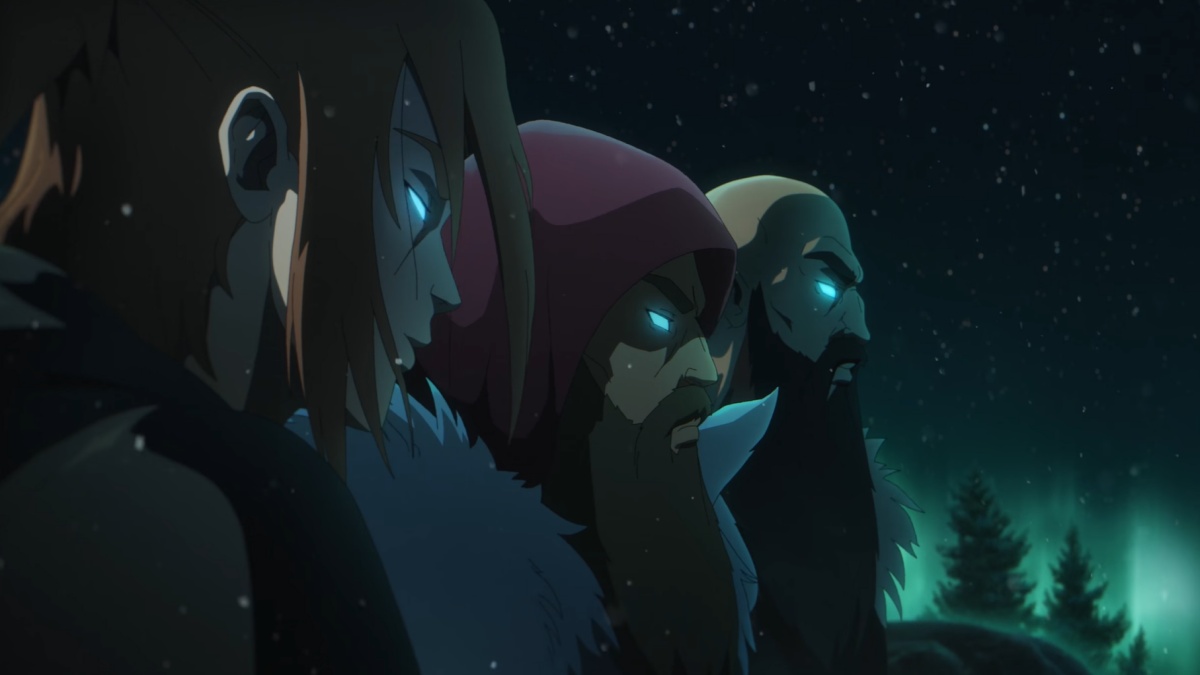
The official pitch calls Deep North glacial peaks and frozen tundra full of old threats, and you land in it through a total white-out.

Once it clears you get snow mesas, buried villages, ice you can walk across, and pine trees under a foot of powder. Iron Gate says the biome runs roughly 2.5 times bigger than the others, and that size shows up in more than just the map.
You do not need an Ashlands-style ship to reach it, but you do need to treat cold the way you treat a boss fight, as a mechanic that punishes you for ignoring it.
Snow is not a texture here. It piles up, and you shovel it if you want to build on cleared ground. Frozen lakes and coastal ice turn into skate-and-slip terrain, and Ember Charges crack that ice the same way they crack a dead troll.
The grappling hook has unlimited uses this time, built from Mistlands parts (Yggdrasil wood, refined eitr, mandibles, and a hook), and it is the only way into the Gates of Mörkhalla, which do not have a front door.
Miss the swing and fall damage is back on the table, so the Feather Cape is worth keeping in a pocket.
The Metal Loop Behind Every Nord Weapon
The real gate in Deep North is the crafting loop, not the cold. Gammeltrolls are not bosses, they are field giants, old Black Forest trolls that walked north and turned into part of the land. They throw tree trunks and petrify when they die, which means a pickaxe just bounces off.

You farm seals for pelts, cook Ember Charges, and blow the petrified statue apart for Petrified Tissue. A Blast Furnace turns that into Bloodgold.
Winding Tunnels and Mörkhalla drop the molds you need, and once you pour a cast at a Frost Foundry and add Liquid Frost from a Frigid Kiln, you finally have a Nord weapon or a key in hand. It is slower than mining ore and swinging a hammer, and that slowness is the point.
The stations that get built around this loop: a Frost Kiln, a Frost Foundry, Smith’s Aprons on the Black Forge, a Smoker on the Cauldron, and a Standing Loom on the Galdr Table.
Armor molds only drop in Mörkhalla. Hexen drop Nornthread and Krigen drop leather straps, while Moose hide and Timberwood cover the wood-and-leather layer.
Seal blubber becomes food, and lingonberries tame a moose you can eventually saddle to make the biome smaller.
Places and Threats Worth Knowing Before You Go
The named locations are abandoned villages, the Winding Tunnels (molds, frostcore, keys), the Gates of Mörkhalla (the hard dungeon that needs the grappling hook), and the Forge of Potential (where idols get delivered).

Around the rim of a Deep North map, you can also roll alternate versions of older biomes, like Rocky Birch Meadows or Deforested Black Forest, so the edges of a 1.0 world are not just more ice repeated outward.
The things trying to kill you up there: Gammeltrolls, Elakingar in the tunnels, Hexen, Krigen, small shapeless pulp blobs, fallen warriors, eyeless creatures, barka, moose that will run you down before they become a mount, and ghost vikings in the ruins. Seals stay harmless until you need their pelts.

The eighth Forsaken boss is Kall Fimbulbringer, and Fimbulwinter, the long winter before the end of the world in Norse myth, is exactly the tone Iron Gate is going for here. Patch notes even list new raid events with lines like “The Jotun have found you,” so a finished ice base still gets visitors.
See also: Aniimo Release Time: Launch Schedule by Region
See also: Fire Emblem Fortune’s Weave: Release Date, Meta & Full Guide
The 40-Plus Weapons, Named and Sorted
Iron Gate’s “40-plus new weapons” line is not padding. It breaks down to one full Nord weapon family, two elemental versions of that same family, four new staves, and the ammo that feeds all of it.

The base Nord line, crafted with Bloodgold at the Frost Foundry, covers Sword, Greatsword, Atgeir, Mace, Sledge, Axe, Greataxe, Spear, Dagger, Knucklechains, Bow, and Crossbow, plus the Nord Buckler, Nord Shield, and Nord Greatshield. The Shield of Roots ships alongside these as a named extra.
The Frostfire infusion repeats the same twelve weapon types, each one carrying fire and frost together. It slows enemies and burns them over time, and the trade-off is lower raw physical damage than a plain Nord weapon. The value here is utility. A Frostfire Crossbow is the clearest example: tag something far away and it spends the next few seconds miserable.

The Thunderblood infusion repeats the same twelve types a third time, built around lightning and bleed.
Community testing on the listed swords puts the package around a 25 percent lightning proc rate, a flat lightning damage bonus, and roughly 0.2 percent extra damage per point of missing health on the target. It reads as the burst-focused cousin of the Thundering gear from Ashlands.
That is already 36 named weapons before staves even enter the count. The four new staves are Echo Spike (a frozen projectile), Spirit Caller (summons a ghost wolf, bear, or moose), Northern Vengeance (a Staff of Protection that hits back when a shield blocks damage), and Lightning Strike (calls a bolt down on a chosen point).
Add Bloodgold arrows, bolts, missiles, and payloads, plus Ember Charges as the biome’s throwable weapon, and the 40-plus number stops sounding inflated.
You do not find a Frostfire or Thunderblood weapon in a chest. You craft the Nord version first, then spend Frostfire Essence or Thunderblood Essence at the Black Forge along with more Bloodgold, and that Essence only comes from a ritual, not a random drop.
That is why early Deep North still feels gated even after your first Gammeltroll kill. Day-one community numbers put a raw Nord Greataxe around 170 slash damage, the Frostfire version around 140 slash plus 10 fire and 80 frost, and the Thunderblood version around 170 slash plus 70 lightning, with total-damage leaderboards currently favoring the Frostfire and Thunderblood crossbows, then the axes and sledges.
Treat any day-one spreadsheet as a snapshot, not a final answer, since those numbers will keep moving as more players finish their upgrades.
One thing worth saying clearly: a good set of Ashlands Thundering gear does not become trash the moment you land in Deep North. This is an upgrade path, not a reason to delete your inventory.
See Also: Upcoming Xbox Game Pass: September 2026 Drops, Ranked
Armor, Capes, Trinkets, and Pockets
Four armor sets shipped with 1.0, matching Iron Gate’s own count.
| Set | Role | What it does |
|---|---|---|
| Lox Fur | First northern set | Enough warmth to walk the snow without leaning on food buffs every 30 seconds |
| Caller | Mage | Headdress, robes, and trousers, plus the Cape of the Caller; the eitr line past Embla |
| Vanguard | Medium | Hood, chest, and trousers built around stamina; pairs well with the Moose Hide Cape |
| Protector | Heavy | Helmet, breastplate, and trousers; the highest raw armor value in the game right now |
The Moose Hide Cape is the frost cape you craft inside the biome itself, and the Cape of the Caller is its magic-focused counterpart.
The Crown of Valheim shows up in the patch notes next to these sets as a named piece, best treated as a trophy item until the wider community settles on exactly how it fits into progression.

Two new trinkets, Neckstabber and Witch Crown, join the full trinket board that Call to Arms already introduced, from the Bronze Pendant up to the Jörmundling. Adrenaline is still the meter those trinkets spend, so 1.0 built on that system instead of replacing it.
The change most players will feel first is inventory size. The default bag is 8 by 4, or 32 slots, and Haldor now sells two upgrades: Wider Pockets, which unlocks after Moder, and Deeper Pockets, which unlocks after the Queen.
Community reports put each one somewhere between 1,000 and 2,000 gold. Together they push the bag to 8 by 6, a 50 percent increase, and this is the first time the base inventory size has actually grown instead of relying on carry-weight workarounds.
The other tools worth knowing: the Grappling Hook, Snow Shovel, a Salvaged or Hooded Lantern for the tunnels, an Intricate Key made from molds, a Moose Saddle, and snowballs if you want to start a fight you are going to lose with some dignity.
The Other 1.0 Systems Players Will Feel in Week One
Idols and the Forge of Potential give exploration a reason to keep paying off after a biome feels beaten. Sixteen protection and battle idols are scattered across the world, and hauling one to a hidden forge grants an upgrade layer that sits above the normal station levels.
New cinematics play as you clear each Forsaken boss, and you can replay them from the menu afterward. There is also a proper opening cinematic now, complete with a Valkyrie ride, instead of just a text crawl and a hard cut to grass.
Building picked up more than 80 new pieces, including working drawbridges, steep 67-degree ashwood and scalewood roofs, ice blocks pulled from an ice maker, and actual wardrobe storage instead of another chest disguised as furniture. The hammer and serving-tray menus got rebuilt so players are not scrolling through a decade of accumulated pieces one at a time.

Underneath all of that, the engine picked up a draw-distance slider, cloth physics on capes and robes, faster saves from a world that now splits its data into chunks, fewer load stutters near zone borders, and retuned spawn rates in Ashlands.
Character creation adds new hair and beard options, and the world adds new valuables (Ancient Coin, Draumyx, Grimvarn, Solryth, and Veydris), new Munin dialogue, new dreams, new standing stones, new raid events, and new music built specifically for the ice.
Achievements exist for the first time in the game’s life, and they only start counting from the 1.0 install forward, so killing Eikthyr again is the only way to get that particular badge back.
Console commands like spawn still flag a save, freefly is the one listed exception, and anything you spawn in stays visibly marked and makes your character temporarily dirty until you drop it.
See Also: Roblox Grand Blue Tier List: Best Races Ranked S to C
How 1.0 Wants You to Play It
Sailing straight north on an old Ashlands character works, but Iron Gate’s own FAQ nudges players toward starting fresh.
Deep North’s generation, idol placement, the alternate rim biomes, and the new cinematics all behave better on a map that still has fog on it.

A veteran who already charted every coastline is going to get a frozen strip and a lot of tiles marked “already explored.” A new world paired with old muscle memory is clearly the run Iron Gate was designed around.
A practical loadout before heading north: beat Fader if you want the gear floor Iron Gate actually intended, though Mistlands is the bare minimum for anyone stubborn enough to push early. Bring a cold-resist cape (Wolf, Lox, Ashen, or Asksvin) until the Moose Hide Cape exists.
Research the grappling hook for every player in a group, not just one person holding the rope. Stack Ember Charges, since no charges means no Bloodgold. Bring food at Ashlands or Mistlands tier, and keep lingonberries handy for the moose-taming project.
Decide how much you care about achievements before anyone touches a console command, since there is no undo on that flag.
Past that setup, the loop is the same one Valheim has always run, just colder: scout, die, haul a corpse off a mesa with a hook, build a roof, shovel the door clear, blow up a statue that used to be a troll, pour a sword, and go back for the next mold.
What 1.0 Is Not
It is not the ocean update. It is not official mod support. It is not a promise of five more years of new biomes. Iron Gate’s stated plan after 1.0 is bug fixes and quality-of-life work, with future content left open.
It is not a live-service relaunch either. What actually shipped is a small Swedish team closing the book they opened during Early Access, and leaving the binding just loose enough in case they decide to write another chapter later.
See Also: Petit Planet: Release Date, Platforms, and Gameplay
Five years of Early Access built the road, and Valheim 1.0 is the last town on it. Deep North gives the game its coldest biome and its most deliberate crafting loop yet, the 40-plus weapon count holds up once you break down the Nord line and its two infusions, and the $29.99 price is the new cost of entry for anyone walking through that door for the first time. Anyone who already lived here before today kept the same key.
Comment with your worst Swamp death, vote for the hardest boss to solo, and the food combo you’re encountering for the first time in Deep North. This one is worth arguing about.
FAQs
Valheim 1.0 added the Deep North, the final blank region on the map since the game launched in 2021. This completes the world alongside the previously added Mistlands and Ashlands biomes.
Valheim 1.0 launched on September 9, 2026, five years after its early access debut. Iron Gate used that time to develop three major biomes and finalize the game's content.
The 1.0 update introduced a full new weapon line tied to the Deep North biome. Specific weapons are detailed in the full review section covering combat changes.
TL;DR
- Valheim 1.0 launched on September 9, 2026, introducing the Deep North biome, over 40 new weapons, and four armor sets, with a price increase to $29.99.
- Crossplay is supported across all platforms, but cross-saves are limited to Xbox and Microsoft Store PC, necessitating careful platform choice for players.
- The Deep North biome features glacial peaks and frozen tundra, requiring players to adapt to cold mechanics, and includes a new crafting loop for powerful Nord weapons.
- Valheim 1.0 is not a live-service relaunch nor an ocean update; it aims to finalize the Early Access experience with future content remaining open-ended.



3 Comments
Pingback: Godzilla Minus Zero: That Massive Monster Zero Secret Explained
Pingback: WoW Forever Explained: Launch Date, Skyborne & Raids
Pingback: Aniimo Release Date, Gameplay, and Minimum Requirements