


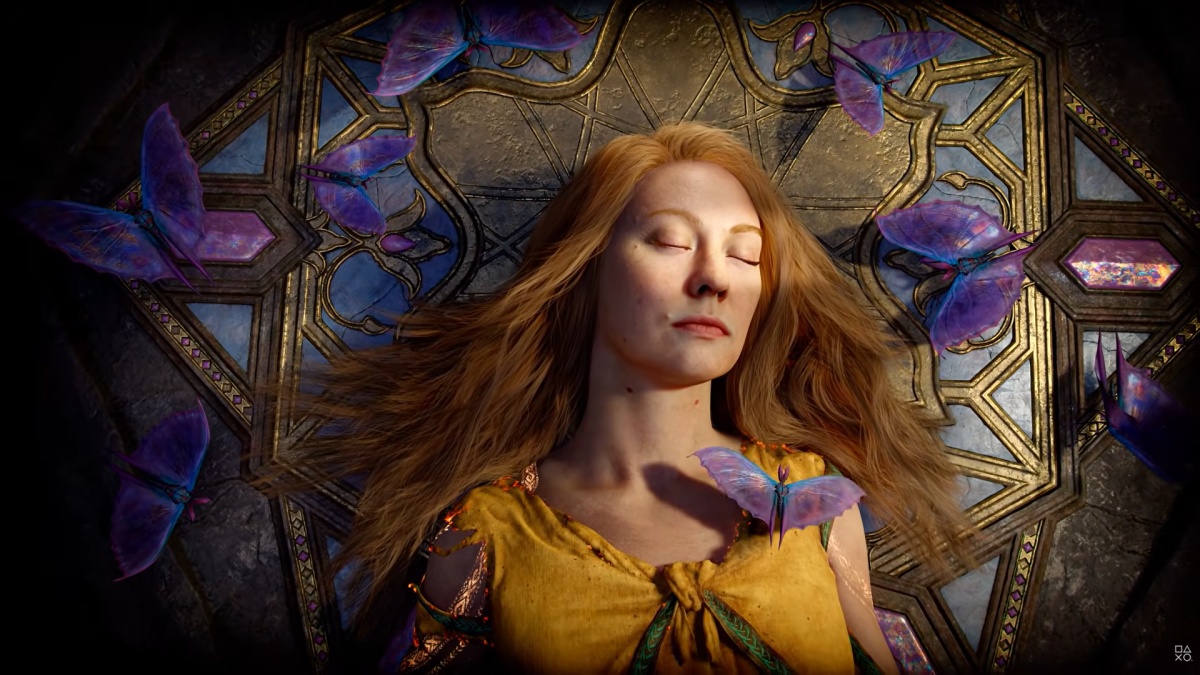
TL;DR
- God of War Laufey features Faye, Kratos's wife, as the playable protagonist, marking a significant shift in the franchise's narrative and gameplay.
- The game is currently a PS5 exclusive, with no confirmed PC port, indicating a focus on utilizing the console's hardware for advanced graphics and gameplay mechanics.
- Gameplay mechanics include a new soul extraction system, where players can detach and manipulate enemies' souls, significantly altering combat strategies.
Disclaimer: This summary was created using Artificial Intelligence (AI)
God of War Laufey just rewrote what we thought this franchise was capable of, and we’re not talking about a minor evolution.
Santa Monica Studio dropped a 20-minute gameplay reveal during State of Play on June 2, 2026, and what we got wasn’t a safe sequel.
It was a full restructuring of the series’ DNA, built around a character the fandom has obsessed over since 2018 without ever truly knowing her.
Faye, Laufey the Just, Kratos’s wife, Atreus’s mother, the last guardian of the Jötnar, is now the playable protagonist, and the implications for combat, lore, and the larger God of War universe are enormous.
See also: Forza Horizon 6 Barn Finds: Unlock All 15 Hidden Japan Locations
God of War Laufey Release Date, What We Know So Far
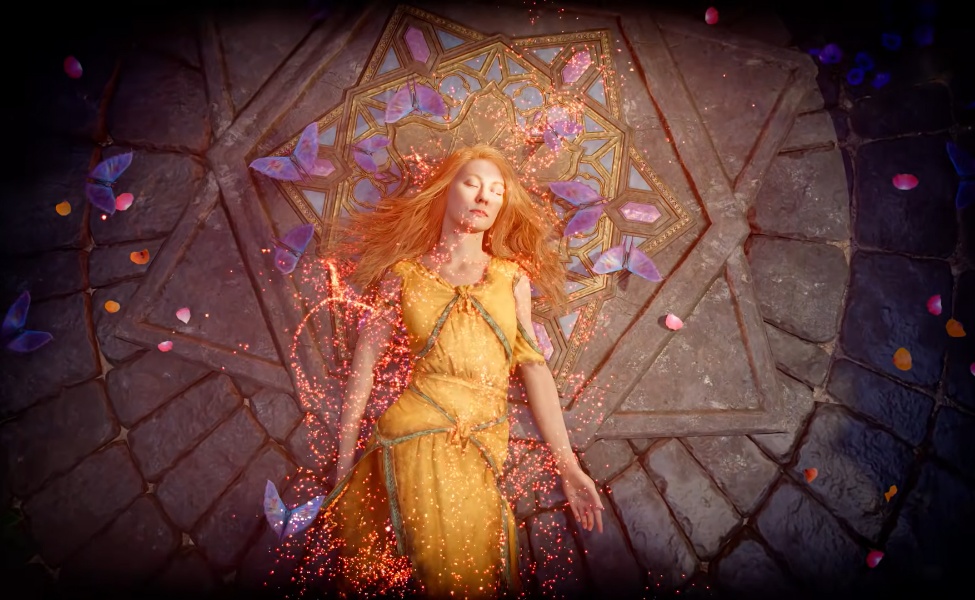
No official release date has been confirmed. Santa Monica Studio and PlayStation have been intentionally vague on a specific window, with the State of Play reveal simply stating the game is coming to PS5.
That said, the quality and completeness of the 20-minute gameplay demo, uninterrupted combat sequences, polished UI, fully voiced cutscenes with zero visible placeholder assets strongly signal the game is deep into production, not in early vertical-slice territory.

Pre-reveal insider reporting from NateTheHate (March 2026) pointed toward a first-half 2027 launch window, and based on how finished the reveal footage looked, that timeline holds up.
The game is already wishlisted on the PlayStation Store, which typically precedes formal pre-order windows by several months.
For comparison, God of War Ragnarök’s reveal to launch was roughly 14 months. If the Laufey announcement on June 2, 2026 follows a similar cadence, we’re realistically looking at a Q1–Q2 2027 window.
Expect a formal release date announcement alongside a second gameplay showcase, probably at a future State of Play or The Game Awards 2026.
Pre-Order and Edition Details
No pre-order tiers, editions, or bonuses have been announced yet. Pre-orders are expected closer to a confirmed release window.
If the series maintains its pattern, anticipate a standard edition, a digital deluxe with early unlock content, and a collector’s edition with physical memorabilia.
Wishlist it on the PlayStation Store now to catch the announcement as soon as it drops.
See Also: Mina the Hollower Launch: 10/10 Soulslike Specs & Builds
God of War Platform and Technical Specs
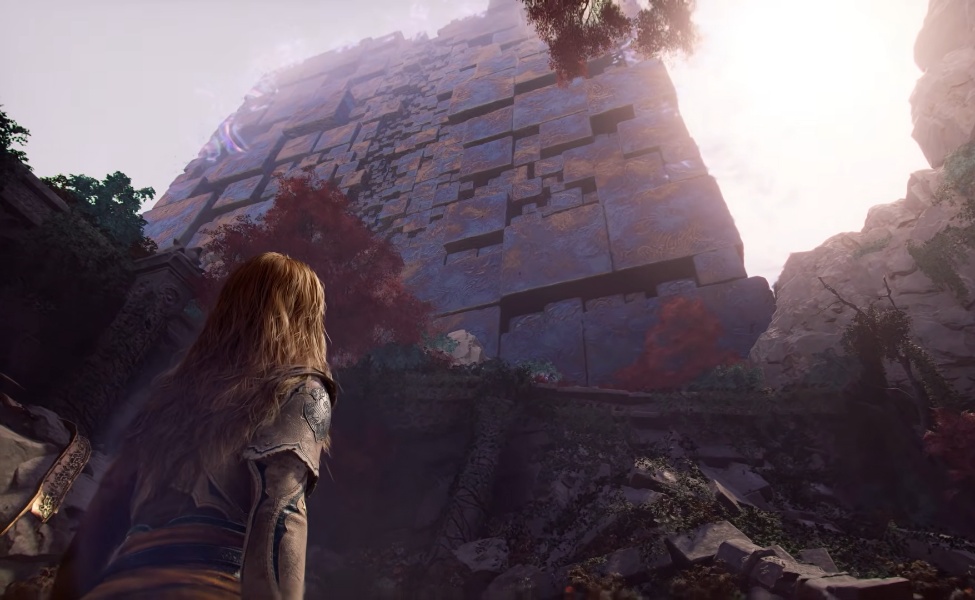
God of War Laufey is confirmed as a PlayStation 5 exclusive. Unlike God of War (2018) and Ragnarök, which both eventually came to PC, no PC port has been announced for Laufey.
This is notable; it could mean Sony is using this as a PS5 system seller heading into 2027 or that the game’s technical demands (particularly around soul magic particle systems and the Everywhen’s dense lighting environments) are being built specifically around PS5 hardware without a porting pipeline running simultaneously.
The reveal footage was demoed running on PS5 and PS5 Pro, with visual fidelity that immediately shows off:
- High-density particle effects for soul extraction and Jötunn magic
- Complex lighting layering across the Everywhen’s bonfires, floating islands, and gateway structures
- Fluid 60fps combat with zero visible frame pacing issues during aerial combos and multi-enemy engagements
- Environmental depth in Everywhen’s multi-mythology ruins that exceeds anything we’ve seen in the Norse realms
No official resolution or frame rate targets have been published, but the demo implies 4K/60fps as the target on PS5, with potential Performance and Fidelity mode splits on PS5 Pro.
The ESRB rating is currently Pending; expect a Mature 17+ rating consistent with the series.
Does Playing Prior Games Matter?
Technically, God of War Laufey is a standalone experience. Practically, the narrative depth is going to hit harder if you’ve played God of War (2018) and Ragnarök.
You’ll have the muscle memory of the combat systems, and more critically, you’ll recognize every lore beat, the Leviathan Axe being Faye’s weapon; the glowing handprint wards on the forest trees; and her foresight paintings in Jötunheim as lived experience rather than exposition.
If you’re new to the series, you can still play it, but you’d be robbing yourself of significant emotional context.
See also: Identity V Redeem Codes June 2026: Hidden Freebies?
Is Laufey Kratos’s Wife? Story Background and Lore Context
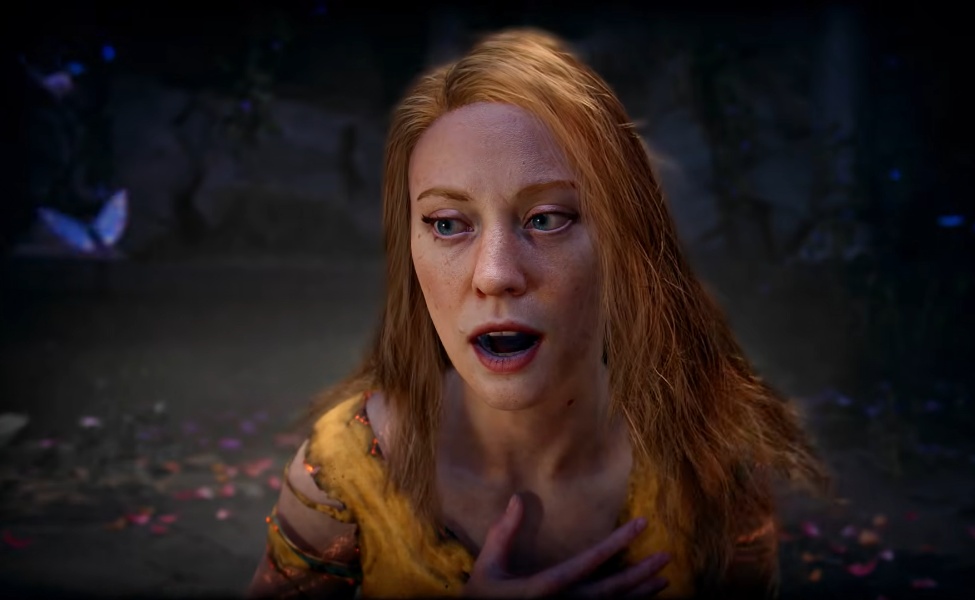
Yes, and unpacking exactly who Faye is explains why this game makes complete sense as the next mainline entry.
Who Is Faye / Laufey the Just?
Faye is a Jötunn (Frost Giant) from Jötunheim, operating under the alias Laufey the Just. She was the Last Guardian of the Giants, a title earned through her role as a rebel commander against Aesir tyranny.
Laufey didn’t just resist Odin’s genocide of the Jötnar quietly. She fought Thor to a near-stalemate in Vanaheim (a battle that destroyed a village and left frozen lightning embedded in the landscape), collaborated with Týr to hide the Jötunheim tower, and constructed concealment wards powerful enough that even Odin, obsessively hunting for Jötunheim’s location, couldn’t detect her forest home in Midgard.
Then she met Kratos, recognized him as equal to her strength, and eventually became his wife. She crafted Atreus’s yew bow. She gave Kratos the nickname “Grumbles.”
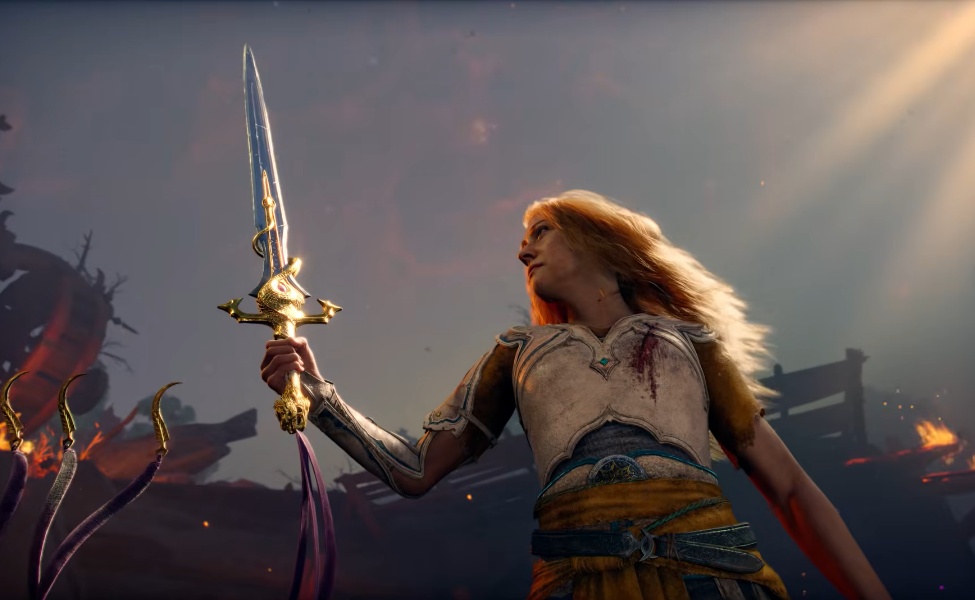
The Leviathan Axe, the weapon that defines Kratos’s entire Norse-era combat identity, was crafted for her first.
She had foresight powerful enough to paint Atreus’s entire journey across the prophecy murals in Jötunheim before it happened.
Then she died. And we watched Kratos carry her body, burn it on a funeral pyre, and scatter her ashes at the top of the highest peak in the Nine Realms. That’s where God of War Laufey begins.
Faye’s Personality: Beyond the Mythology
What makes Faye compelling beyond her combat resume is her value framework. She was someone who consistently chose to limit harm when she had the power to act.

And she hid her true nature not from cowardice but from strategic restraint, believing Kratos and Atreus needed to forge their own path rather than being guided by prophecy. She fought because she had to, not because she needed the violence to feel alive.
That moral complexity, warmth, and lethality existing in the same person is exactly what Santa Monica Studio is positioning as the core of this game.
Faye teased Kratos. She read the room. She understood power differently than he did, and that difference is going to be the lens through which God of War Laufey reframes what this franchise can explore.
The Everywhen: World Design and Narrative Architecture
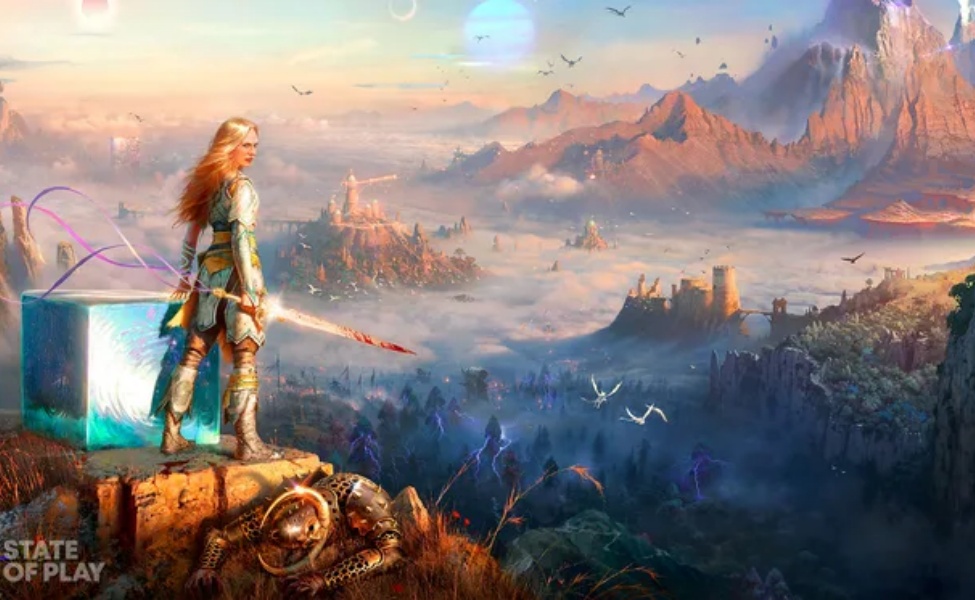
The setting of God of War Laufey is the Everywhen, and it is not Valhalla, not Elysium, not the Realm Between Realms.
It’s something structurally different: the transcendent afterlife of the gods themselves, the birthplace and endpoint of all magic.
It exists above the Nine Realms, above the Greek Underworld, above every mythology’s conception of an afterlife for mortals.
What the Everywhen Actually Is
The Everywhen is where gods go when they die. Every deity across every mythology, regardless of their pantheon, ends up here.
And because these are gods, beings whose entire identity is constructed around power, dominion, and divine right, what you get is exactly what Cory Barlog described: a prison full of the most dangerous egomaniacs in all of existence, all of them fighting each other because that’s all they know how to do.
Structurally, it’s a place where the density of magic is increased by a thousand times over any realm Kratos or Faye ever worked in.
Mechanically, this means that Faye’s Jötunn soul magic, already a force to be reckoned with across the Nine Realms, becomes something else entirely in the Everywhen.
This is more than just a narrative beat cause it serves as design justification for the scale of abilities revealed in the gameplay reveal.
The Everywhen’s Visual Language
The 20-minute reveal showed us enough to understand the world’s visual grammar: bonfires of corpses, caged creatures being rounded up, floating islands connected by ancient structures, an ominous gateway hanging in the sky, killer flowers that attack on contact, and masked skeletons patrolling the perimeter.
The lighting engine is doing serious work here; Everywhen has this oppressive, amber-tinged density that feels like it’s physically pushing against you, like the realm itself has weight.
The multi-mythology architecture means we’re not getting a unified Norse/Egyptian/Mongolian aesthetic; the realm is intentionally chaotic, visually representing the collision of incompatible divine traditions forced together in one space.
See Also: Desert Storm Map Strategy: Last War Survival Guide
God of War Laufey Story: Narrative Setup and Parallel Timeline
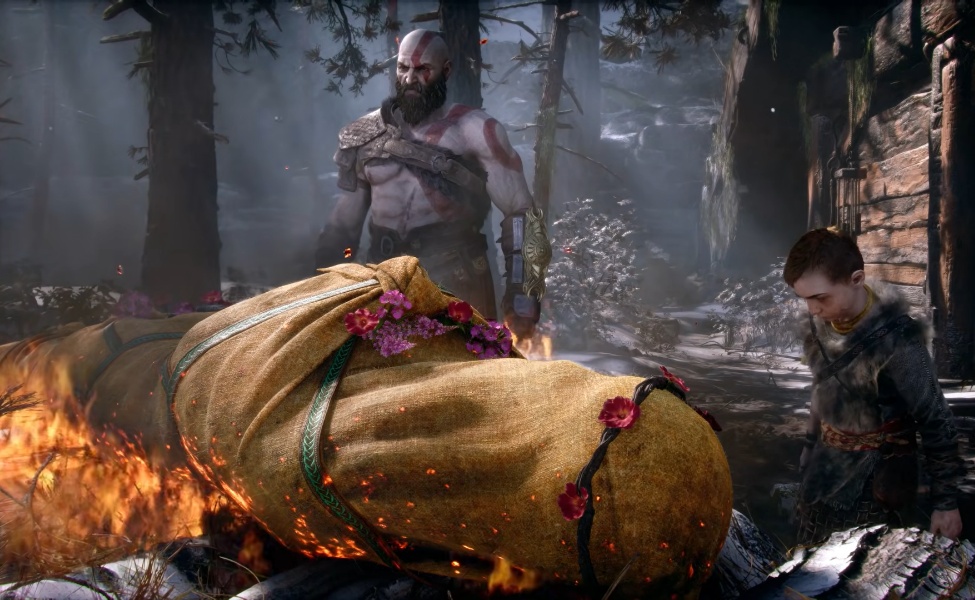
The story begins the moment Faye’s funeral pyre is lit in the opening minutes of God of War (2018).
From there, rather than ending, she wakes up in the Everywhen, confused, separated from everything she planned, and facing an immediate threat from gods who view her arrival as an intrusion.
The Core Narrative Stakes
Faye spent her life in Midgard orchestrating a plan to protect Kratos and Atreus after her death. Every foresight painting, every hidden cache, and every ward; it was all part of a deliberate blueprint for their survival.
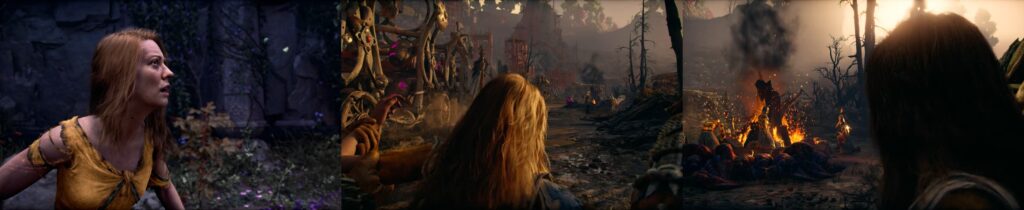
In Everywhen, she discovers that the plan is now at risk. She doesn’t know exactly how or why yet, but the structure of the Everywhen, specifically the disrupted flow of magic through the realm, is threatening to unravel everything she put in place.
The emotional core is that Faye has just been separated from her husband and son. She can hear Kratos’s voice. She sees visions of him.
The timeline is running parallel to the events of God of War (2018) and Ragnarök simultaneously, which means that while she’s fighting through the Everywhen, her family is living through the events we already know.
That parallelism creates a specific kind of dramatic tension; we know how things end for Kratos and Atreus, but Faye doesn’t, and her fight is to ensure that ending remains possible.
Multi-Mythology Antagonists: Sekhmet and Begtse
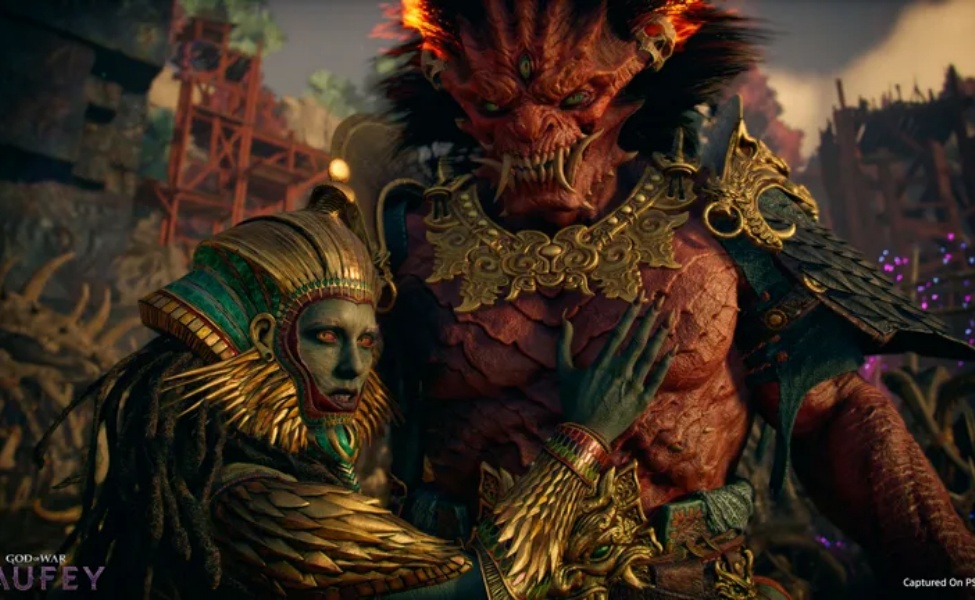
Two gods are the primary threats introduced in the reveal. Sekhmet, Egyptian goddess associated with war, plagues, medicine, vengeance, and the sun was created by Ra to punish humanity and nearly wiped them out before being restrained. In the Everywhen, she’s operating as a power broker with serious authority over other deities.
The reveal shows her with genuine command presence, not just a big health bar, but a character whose relationship with violence reads as institutional rather than impulsive.
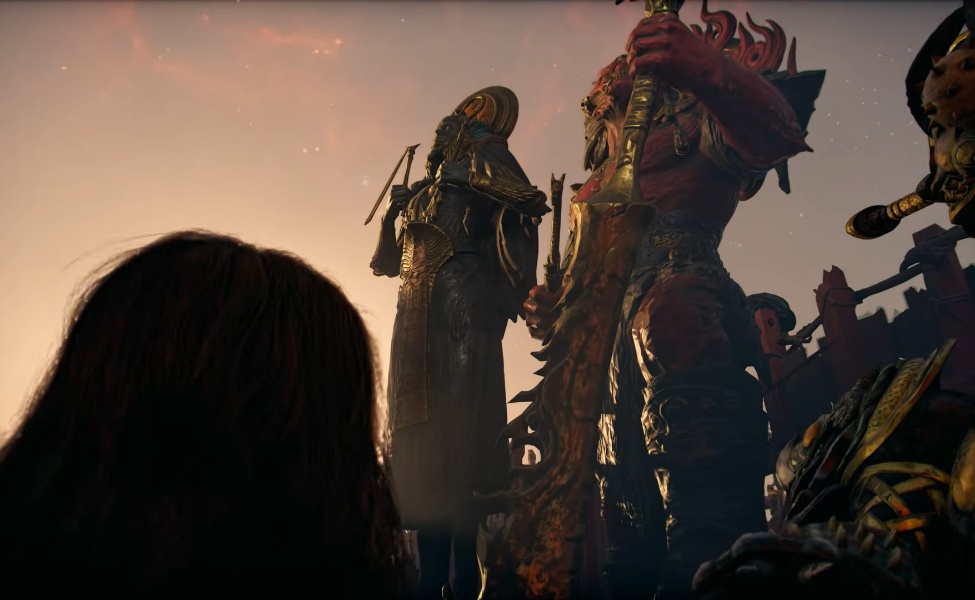
Begtse is the Mongolian/Tibetan god of war, whose name derives from a Mongolian word meaning armor.
He’s functioning as Sekhmet’s enforcer, a colossal, physically overwhelming presence acting as an afterlife bouncer for her operations.
The combination creates a double threat: one tactically intelligent and magically powerful, the other a pure physical threat designed to overwhelm Faye’s agility with mass.
Both are treated with genuine mythological weight, which is exactly what Santa Monica does best. These aren’t palette-swapped fantasy villains cause they have actual divine histories that inform how they operate and what they represent.
See Also: Yvonne Arknights: Endfield Best Build Guide & Team Meta
God of War Laufey Gameplay: Combat System Deep-Dive
This is where things get genuinely interesting for anyone who’s put serious time into the Norse-era combat systems.
The approach Santa Monica is taking with Faye isn’t just “faster Kratos.” It’s a structural rethink of the combat framework built on a completely different physical and magical profile.
Faye vs. Kratos: The Combat Philosophy Difference
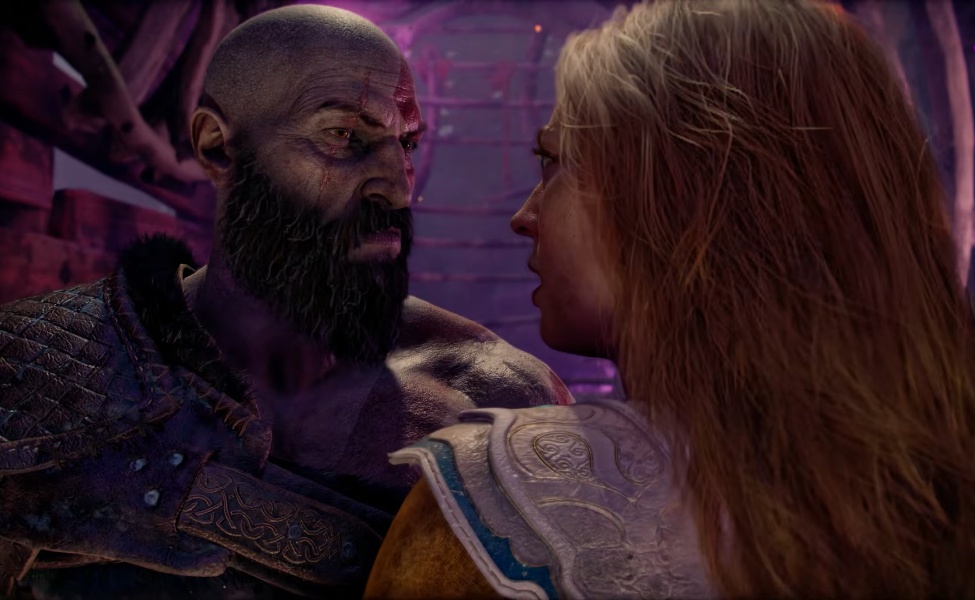
Kratos is built like a siege weapon. His combat style in the Norse era is fundamentally about controlled aggression: shield management, shield bash timing, Leviathan Axe throw/recall, Blades of Chaos whip extensions, and Runic Attacks as punctuation marks in a heavyweight brawl.
The shield parry timing in God of War (2018) is incredibly tight; that window where you catch a blow clean and the perfect parry sound cue hits is a muscle memory reward that defines the combat’s cadence.
Faye operates on a completely different timing curve. She’s athletic and agile rather than immovable, and her lethality comes from maintaining momentum through continuous offensive pressure.
The 20-minute reveal shows her transitioning between ground and aerial combat without breaking combo strings; this is a meaningful mechanical departure from Kratos, where aerial options existed but felt like excursions rather than integrated flow states.
The design team explicitly went back to the Greek-era combat roots for Faye’s movement framework, the fluidity and aerial mobility from the original God of War trilogy, and married it to the Norse era’s emphasis on gritty close-range exchanges and companion utility.
What that produces is a system that will feel familiar to series veterans while demanding a completely different mental model for high-level play.
The Legendary Sword: Mechanics and Potential
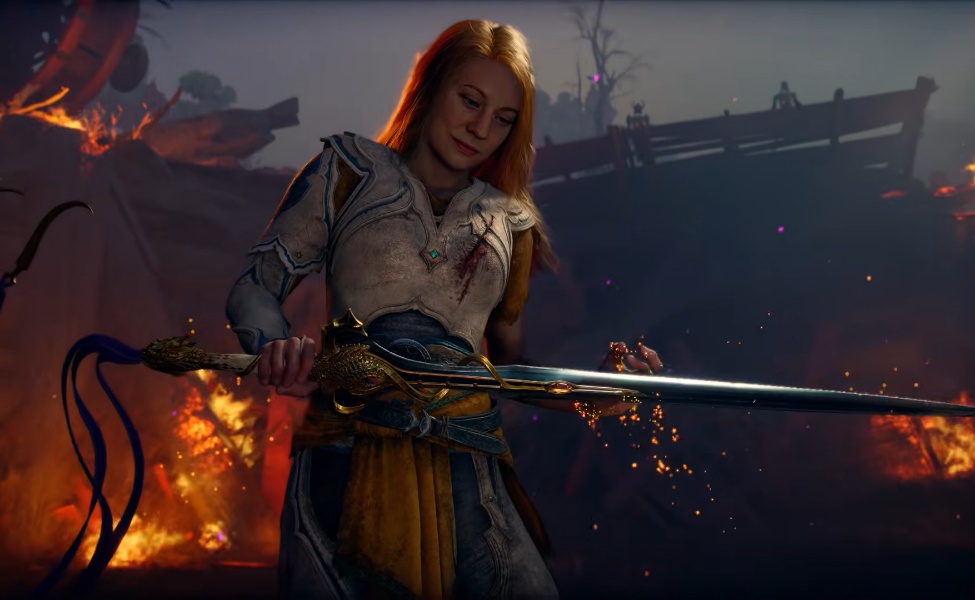
Faye’s primary weapon is a sword extracted from Phranque, the cosmic cube companion, and protected by Rue, the enchanted ribbon guardian.
The reveal shows the sword operating at a tempo that rewards constant forward pressure: fast, controlled, relentless in the way Faye’s combat philosophy is described.
Unlike the Leviathan Axe, which had a natural rhythm built around throw-recall-close-range flow, the sword appears to be a pure contact weapon with magical extensions through Faye’s Jötunn abilities.
The ribbon attachment (Rue) isn’t just cosmetic; given that she’s the sword’s guardian, she likely integrates into the combat system as a range extension or crowd control tool, similar to how the Blades of Chaos handled distance management for Kratos.
Watch the reveal footage carefully: when Faye attacks at range, ribbon-based visual elements extend the sword’s effective area. This could map to a dedicated ability slot or a stance-based system.
Jötunn Soul Magic: The Core Combat Differentiator
This is the mechanical centerpiece of God of War Laufey’s combat system, and it’s unlike anything in the series’ history.
As the Golden Hand of the Jötnar, Faye has innate soul manipulation abilities. In Midgard, these were suppressed by the relatively lower magic density of the Norse realms.
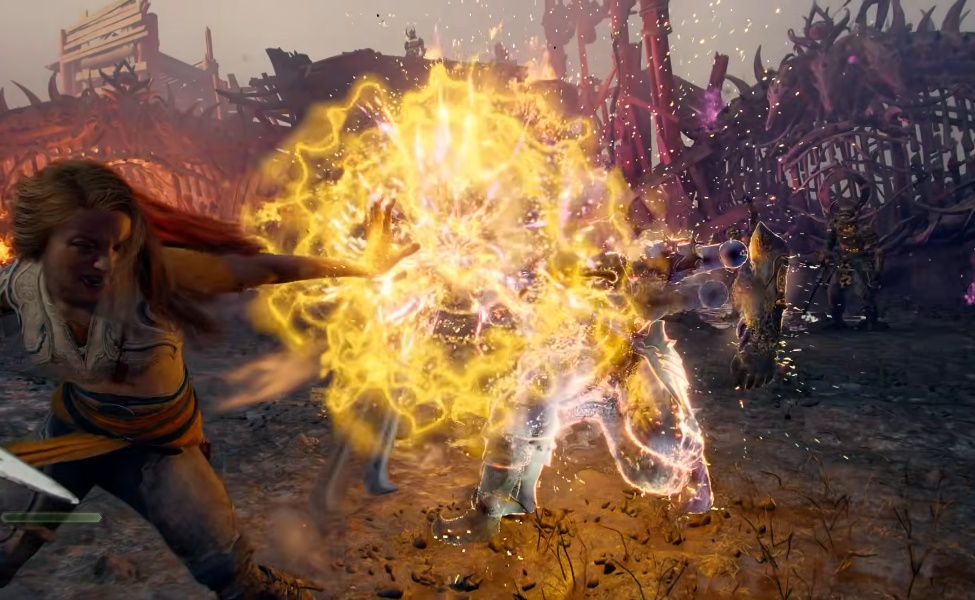
In Everywhen, with magic density amplified by a factor of a thousand, her soul abilities operate at a completely different scale.
The core mechanic shown in the reveal: Faye strikes an enemy with her golden palm, detaching their soul from their physical body. From that point, the soul becomes a secondary target and a tool simultaneously. You can:
- Attack the soul directly for additional damage
- Knock the detached soul into nearby enemies as a projectile
- Use the soul’s position to create combo extensions that bypass the original body’s armor states
This is significant from a combat optimization standpoint. Hyper-armor has been a consistent challenge in God of War boss encounters; the moment a boss enters a hyper-armor phase, your normal combo strings get absorbed without stagger, forcing you to either back off, eat the hit, or have a Runic Attack charged and ready. Soul extraction potentially bypasses physical armor states entirely, since the soul isn’t protected by the same defenses as the body.
If that’s how it works mechanically, high-level combat against gods like Sekhmet and Begtse becomes a fundamentally different puzzle than fighting Valkyries or Berserkers; it’s less about finding the right moment to commit a heavy attack and more about managing dual targets across the arena.
Aerial Combat and Mobility Architecture
Manual jumping returns to God of War for the first time since Ascension, and the design implications are substantial.
In the Norse-era games, Kratos’s lack of a manual jump was a deliberate design choice that kept combat grounded and focused on the shield-parry-dodge-attack rhythm. For Faye’s system, giving players direct aerial control means combo routing now has a vertical dimension.
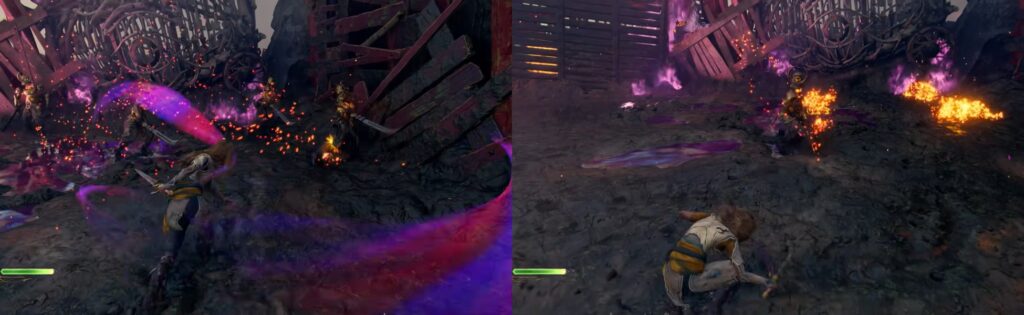
The reveal shows her transitioning into the air mid-combo without resetting her offensive momentum, a technical achievement that requires animation blending at a quality level that’s genuinely impressive.
More importantly, aerial positioning appears to be integrated into the soul magic system: you can detach a soul, get airborne, and knock that soul into enemies from above, using height to control angle and splash radius.
Defensive options in the air remain unclear from the reveal footage, but Faye’s increased mobility toolkit almost certainly includes aerial dodge frames and likely an aerial parry variant; given how combat-dense the Everywhen encounters look, you’d need reliable defensive options in every movement state.
See Also: Paralives Release Date: When You Can Play and Other Details
Companion System: Phranque and Rue
God of War has always used companions as more than narrative scaffolding; Atreus’s shock arrows, Freya’s vine traps, and Mimir’s exposition were all mechanically integrated into how you played through encounters.
Phranque and Rue follow this tradition but with a much weirder energy.
Phranque

Voiced by Jack Quaid (The Boys), Phranque is a gelatinous cosmic cube with what Barlog describes as genuine earnestness and a real personality; not comic relief, but a character with an actual internal struggle that grounds the companion dynamic.
His combat role isn’t fully detailed yet, but given that the sword was embedded in him and he’s actively fighting alongside Faye, he likely functions as both a platform for traversal (his cubic geometry suggests puzzle utility) and a secondary combat element, possibly deploying protective effects or amplifying Faye’s soul magic.
Barlog’s framing of Phranque as “one of the most important parts” of the game from day one of development is telling. He’s a core narrative and mechanical pillar.
Rue
Perlina Lau voices Rue, the enchanted ribbon guardian whose entire existence is built around keeping the sword out of the wrong hands.
The fact that she’s part of Faye’s combat system, the ribbon extensions shown off in the reveal footage, means she’s not a passive guardian but an active combat multiplier.
Consider her to be equivalent to the Blades of Chaos’ whip range but with the magical properties of a guardian enchantment.
Lawrence describes Faye, Phranque, and Rue as “gaming’s weirdest threesome,” and the humor in that phrasing is intentional; the tonal balance between brutal god-slaying and genuinely strange, warm character chemistry is exactly what made Kratos and Atreus work. This trio is based on the same foundation.
See also: Steam Summer Sale 2026: How to Spot the Fake Deals
How God of War Laufey Connects to the Broader Universe
Santa Monica has been explicit: this is not a side story. It’s not a spin-off. It’s the next chapter in a singular universe that now encompasses God of War (2018), Ragnarök, Sons of Sparta (the 2D prequel released earlier in 2026), and Laufey; all running in a coherent continuity.
The parallel timeline structure is the key architectural decision. Faye’s story in the Everywhen runs simultaneously with the events of 2018’s God of War and Ragnarök.
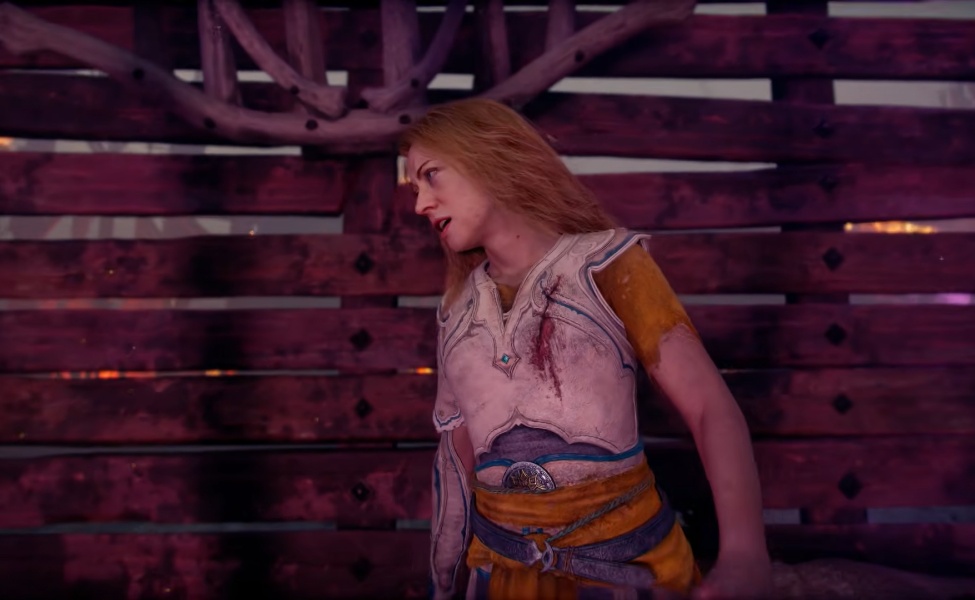
Kratos appears via visions and voice throughout; the moment the pyre is lit, she’s separated from her family in the most absolute way possible, but the emotional connection isn’t severed.
She can apparently communicate with Kratos during certain moments of Ragnarök (which retroactively reframes some of those games’ more ambiguous spiritual sequences).
More critically: “everything that we’re doing inside of this game, running in parallel to the timeline of 2018 and Ragnarok, also has direct connections to everything.”
Barlog’s framing here is careful and deliberate. What Faye does in the Everywhen doesn’t exist in isolation; it has direct causal connections to what Kratos and Atreus experience.
The implications for lore theorizing are significant: if Faye’s soul magic and actions in the Everywhen have material effects on the Nine Realms timeline, then certain events in 2018 and Ragnarök that felt like coincidence or divine will might actually be Faye operating from the other side of death.
Narrative Director and Developer Insight
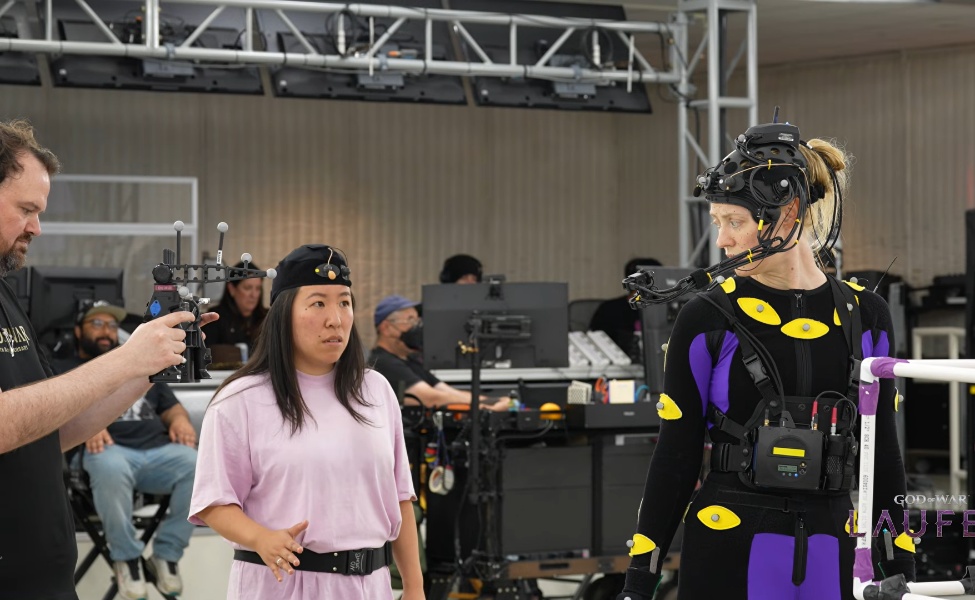
Game Director Ariel Lawrence has been the primary voice articulating the game’s design philosophy.
Her framing, “It’s not a departure; it’s more of an expansion,” captures the production intent precisely. Faye was always the character whose absence defined the Norse saga’s emotional core.
She influenced Kratos’s entire behavioral evolution. She set the conditions for Atreus’s journey. Building a game around her isn’t a reboot; it’s completing the picture.
Cory Barlog, Santa Monica’s Head of Creative, is operating in his signature role of conceptual architect, establishing Everywhen’s thematic framework, defining Faye’s relationship with magic as intrinsic rather than instrumental, and ensuring the companion system has genuine heart beneath the weird visual design.
The game has been in development long enough that Phranque, the cosmic cube, has been consistent through every major creative iteration.
That kind of long-running character consistency from early development through a polished reveal is a strong signal of a creatively stable production.
Community Response and What It Tells Us
The reaction to the God of War Laufey reveal across r/GodofWar, r/PS5, and r/Games has been overwhelmingly positive.
The specific points generating the most discussion: Faye’s aerial combat system and how it changes the skill ceiling, Sekhmet as a boss encounter, the soul manipulation mechanics’ competitive depth, and the visual world design of Everywhen.
The backlash about the female protagonist exists and is being rightfully ignored; it doesn’t reflect the core God of War community, and the argument falls apart the moment you understand that this isn’t replacing Kratos; it’s expanding the universe around him.
The developers confirmed Kratos and Atreus remain important to the story. This is addition, not subtraction.
The confusion around the name “Laufey” is real; searches mixing up Laufey the God of War character with Laufey the Icelandic singer have been a significant community joke, but it also reflects how dominant the reveal has been in the cultural conversation.
Pronunciation note for anyone who needs it: it’s “LAO-fay” in the game’s Norse context, not the singer’s “LAY-vay.”
See Also: Yoshi and the Mysterious Book: First Impression of the New Switch 2 Game
God of War Laufey represents the most ambitious expansion of this franchise’s scope since Santa Monica rebooted Kratos in 2018.
The decision to build a mainline entry around Faye is a creatively coherent choice that resolves the most significant unanswered question in the series’ lore: who was Laufey the Just, not as a dead wife, but as a warrior operating at full power?
The combat system they’re building around her, soul extraction mechanics, aerial freedom, sword-and-ribbon range extensions, Greek-era fluidity fused with Norse-era companion depth, has the architecture for one of the highest combat skill ceilings in the series.
The Everywhen, as a design space gives Santa Monica permission to introduce mythological enemies from any tradition, which means boss encounter variety that the Norse-locked realms couldn’t provide.
No release date yet. PS5 exclusive at launch. Insider consensus around H1 2027. The reveal footage already looks this good.
Add it to your wishlist. When the release date drops, you’ll want to have been watching.
FAQs
Santa Monica Studio revealed 20 minutes of gameplay footage during State of Play on June 2, 2026, showcasing a complete restructuring of the series' DNA rather than a traditional sequel evolution.
The game introduces multiple mythologies into the franchise, fundamentally changing the scope and direction of what players expect from the God of War series.
Instead of following the established formula, Laufey represents a bold departure that rewrites the franchise's core mechanics and storytelling approach.
TL;DR
- God of War Laufey features Faye, Kratos's wife, as the playable protagonist, marking a significant shift in the franchise's narrative and gameplay.
- The game is currently a PS5 exclusive, with no confirmed PC port, indicating a focus on utilizing the console's hardware for advanced graphics and gameplay mechanics.
- Gameplay mechanics include a new soul extraction system, where players can detach and manipulate enemies' souls, significantly altering combat strategies.
