

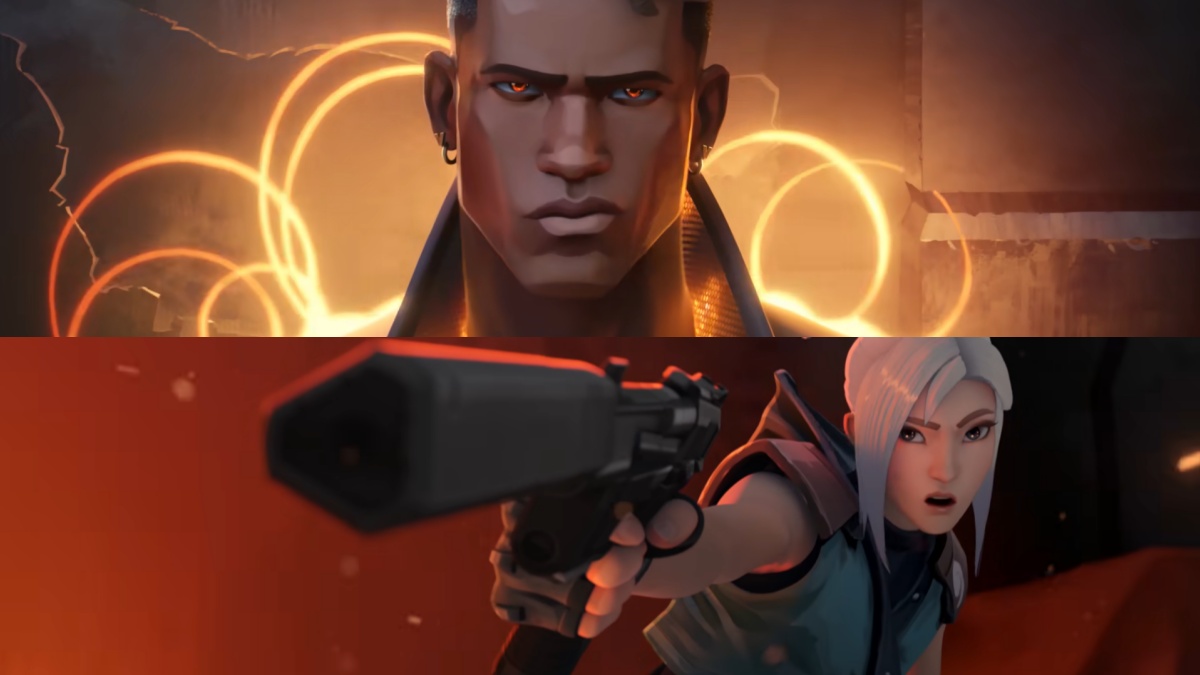
TL;DR
- The recent map rotation in Patch 13.04 significantly impacts Duelist agent selection, with Jett emerging as a preferred choice on Abyss due to its tight verticality, while Raze struggles with open ledges.
- Neon leads the Duelist role with a win rate of 51.9% and a 5.1% pick rate, illustrating the importance of adaptability and skillful execution post-nerf.
- Effective entry pathing and space creation are critical for Duelists; players should prioritize team communication and use utility to secure angles before committing to fights.
Disclaimer: This summary was created using Artificial Intelligence (AI)
This Valorant Duelist guide exists because most breakdowns stop at tier lists and never explain why a Duelist’s first ten seconds on the round clock decide everything that follows.
Patch 13.04 opened Act 5 with Breeze rotated out and Abyss rotated back in, and that single map swap rewrote how every Duelist in the role gets picked.
Tight verticality and no safety rails at the edges (fall off Abyss and you die) mean Operators lose value and close-range Duelists gain it. Jett has become the standout pick for that map specifically, while Raze struggles on its open ledges after losing her quick-cast Satchel.
If you main this role, the agent select screen now asks a harder question than “who’s my best aim character.”
The Valorant Current Ranked Meta Snapshot for Duelists

Eight agents fill the Duelist slot as of this patch, and the win rate spread is tighter than most players assume.
Neon currently sits at the top of the role with a win rate near 51.9% on a modest 5.1% pick rate, the reward for players willing to relearn her post-nerf fuel management.

Phoenix trails close behind at roughly 51.5%, still the safest default pick in solo queue because his kit doesn’t ask teammates for anything.
Jett, despite carrying the highest pick rate in the role at around 13.5%, has settled into the middle of the pack at close to 50.3% win rate outside of Abyss specifically, proof that raw popularity and raw performance are two different stats.
Raze, Waylay, and Reyna cluster around the 50% line, and Yoru sits just under it at roughly 49.7%, reflecting how much of his value depends on map knowledge rather than mechanics alone.
Map pool matters more than usual this patch. Abyss punishes wide-open Operator holds and rewards Duelists who fight in tight vertical corridors. Summit, still fresh in the pool from earlier this year, favors mobility and fast rotations over long sightlines.
Ascent and Haven remain the classic proving grounds for Jett’s Operator-line dashes and Phoenix’s flash-and-heal loop. Knowing which Duelist fits which map is no longer optional if you queue Competitive with any consistency.
See Also: 2XKO Is Ending Active Development, What Comes Next?
Duelist Agent Meta and Deep Dives (Patch 13.04)
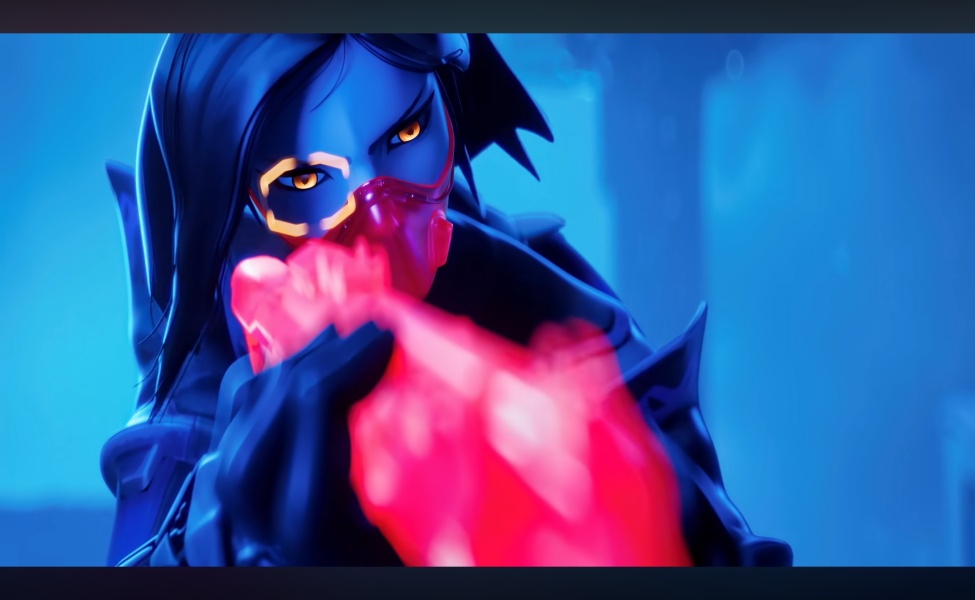
The current ranked data for Platinum and above highlights a clear hierarchy.
Let us examine how the agent pool functions in the current map rotation, including Abyss and Summit.
Neon

Neon’s identity survived the recent tuning pass, but the execution got harder. Aerial speed while sprinting now matches her melee speed rather than adding a bonus, and fuel regeneration on kills mostly locks behind an active Overdrive.
That means the days of zipping across a map on autopilot are over. Good Neon players pre-place Fast Lane walls, read enemy positions before committing a Relay Bolt stun, and treat battery like a resource budget instead of an infinite well.
She still has the fastest map presence of any agent in the game, and coordinated teams built around her slides remain lethal at every level of play.
Phoenix

Curveball flashes you can throw around a corner and blind yourself safely, a Blaze wall that heals you while you fight inside it, and a cheap ultimate that lets you practice the same entry over and over.
Phoenix asks nothing of his four teammates, which is exactly why he remains the most reliable pick when you can’t trust your Initiator to land a flash on time.
He won’t carry a coordinated pro lobby by himself, but in ranked, where team communication is a coin flip, his self-sufficiency wins rounds his aim alone couldn’t.
Jett

No sustain, no safety net, just a dash, an updraft, and cloudbursts that buy you a window to reposition. Jett rewards players who can hold an Operator angle, take the pick, and dash out before the trade comes back.
She punishes overcommitment harder than any other Duelist: miss the shot and there’s nothing left to bail you out.
On Abyss specifically, her ability to fight in tight vertical spaces without needing wide-open sightlines has made her the standout pick of the patch, even as her overall win rate sits in the middle of the pack elsewhere.
Reyna

Leer blinds, Devour heals off a kill, Dismiss turns her briefly untargetable, and Empress rewards a kill streak with a firing and reload speed boost.
Recent tuning brought her Leer health and Empress buff down to more standardized values, so she isn’t quite the free-win button she used to be.
She still dominates in lobbies where you’re clearly the sharpest shooter in the room. Coordinated teams rarely run her without guaranteed trades, because a Reyna who dies first contributes almost nothing.
Raze

Boom Bot clears corners for information, Blast Packs let you satchel onto angles no other Duelist can reach, and Paint Shells turn her ultimate into a round-ending clear.
She’s the rare classic Duelist whose value doesn’t hinge on winning the first duel, which is exactly why she keeps showing up in professional play across regions even when her ranked win rate sits near 50%.
Abyss is her worst map this patch: the open ledges and the loss of her quick-cast satchel option strip away the tight-space creativity that makes her work.
Yoru
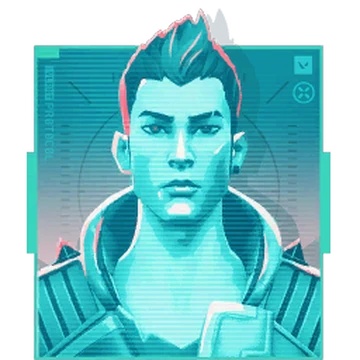
Blindside, Fakeout footstep decoys, Gatecrash teleports, and an ultimate built for safe scouting or a surprise re-entry. Yoru trades raw entry power for disruption.
He wins by breaking the enemy’s read on where the fight is happening, not by winning the first gunfight himself.
He’s a strong secondary Duelist in a coordinated stack and a rough pick if you’re the only aggression on your team.
Iso

Undercut pierces walls to apply Vulnerable and Suppress, Contingency throws up an indestructible wall you can push behind, and Double Tap gives you a personal shield that refreshes off kills or picked-up orbs.
Kill Contract turns a 1v1 into a guaranteed fair fight. Iso rewards players who already win most of their isolated duels and punishes anyone who tries to force him into group fights he isn’t built for. His low pick rate says more about how demanding the kit is than about his actual power level.
Waylay

Lightspeed gives her one or two dashes, the first of which can angle upward. Refract lets her place a beacon and become briefly invulnerable when she returns to it, recharging every two kills.
Saturate applies a Hinder cluster that slows movement and fire rate, and her ultimate leaves a speed-boosted afterimage with an area Hinder effect attached.
She plays like a safer hybrid of Jett and Neon, and her real edge right now is novelty: fewer opponents have drilled down her exact timings compared to the agents who’ve been in the game for years. That won’t last, so the value is highest for players who put in the reps now.
See Also: Valorant Night Market July 2026: Dates, Skins & Deals
Optimal Entry Path for Valorant Duelists
Every strong Duelist main treats entry pathing as a rehearsed sequence, not an improvised gamble. Cloud9’s academy staff and multiple Radiant-level coaches repeat the same instruction: never dry-swing the hardest angle on a site alone.
Ask your Sova for a drone, your Fade for a UAV read, or your Viper for a wall before you commit a dash or a satchel into unknown space. When a teammate lands a stun a half-second before you turn a corner, that corner becomes free real estate instead of a coin flip.

Slicing the pie is the actual mechanical skill underneath “good positioning.” Jiggle each corner slowly, use jump-peeks for a quick information check, and bait out enemy utility before you commit your own.
High-Radiant Neon players build this into her kit directly: sprint into a jiggle at every corner, break the rhythm just enough that a waiting Operator or Vandal can’t time a shot, and keep the pace up so you don’t get caught standing still. Set a five-second window for any execute.
If the push stalls past that, slow down and reset rather than trickle bodies into a set defense. Rotations are already inbound the moment the round clock passes that mark, and overheating (taking the opening kill, then dying for a second, unnecessary one) remains the single most common mistake at every rank below the top of the ladder.
See Also: ENC Valorant Qualifiers 2026: Full Rankings and Rosters
How to Maximize Your Space Creation and Trade Efficiency
Kills are the byproduct of good Duelist play, not the goal. A widely echoed line among current pros still holds up: your job is to make the round easier for four other people, not to pad your own scoreboard.
Breaking a defensive setup by forcing a dash through a choke point, even one that costs you the round of your own life, is worth it if your team floods through the gap you opened.
Space conversion is what separates a Duelist who racks up Average Combat Score from one who actually wins rounds: after the opening pick, push into the ground your kill created (a default plant spot, an angle into their spawn) instead of hunting a second frag alone.
Tradeability decides whether that first kill matters at all. Position so a teammate can immediately swing onto whatever you engaged, and keep enough mobility in reserve (a dash, a Dismiss charge) that you aren’t dead the moment the trade comes back the other way.
Practicing this is mechanical, not abstract: load into a custom game on every map in your pool, identify the one piece of space each site actually needs taken, and build three distinct entry routes into it using your agent’s kit.
Repeat until the sequence is muscle memory instead of a decision you’re making live under pressure.
A Complete Breakdown of Jiggle Peeks and First Blood Mechanics
The difference between a wide swing and a jiggle peek is a read, not a preference. A wide swing commits your whole body to an angle and trades information for exposure; a jiggle only shows enough of your model to bait a shot or confirm a hold without giving up the fight.
Duelists who mix both, rather than defaulting to one, are far harder to time. Movement between shots matters just as much: strafing after every burst resets your accuracy penalty and makes you a moving target instead of a stationary one, a habit that separates high-Immortal and Radiant aim from everyone shooting from a dead stop.
Crosshair placement discipline compounds all of this. Pre-aim head level on every angle you clear, favor a Vandal by default with a Phantom or Judge swap for close-quarters Neon or Raze executes, and reserve the Operator for maps where your team can reliably trade an isolated pick.
First blood is a mathematical disruption of the enemy’s crosshair placement and rotation timing, which is why a Duelist who dies immediately after securing it has often done more harm than good.
See Also: VALORANT Flashback 2025: How to Check Your Recap, What’s Inside, and Why It’s Always So Fun
Advanced Role Play: Defense, Synergies, and Psychological Reads
Duelists aren’t pure anchors on defense, and treating the role that way wastes its actual strength. The standard high-level playbook: hunt an opening pick for information, then use your mobility to fall back rather than dying alone holding a site with no numbers advantage.

Jett’s A-Main hold on Haven or a Reyna aggressive peek into Mid on Ascent both follow the same logic. Only commit fully to holding a site when one or two teammates are already there with you; otherwise, give up the space, fall back, and retake as a coordinated unit.
How well your kit combines with the rest of the comp still decides how far individual skill can carry it. A classic Duelist paired with an Initiator (info feeding directly into the entry) remains the most reliable structure in both ranked and pro play.
Raze paired with Sentinel-cleared utility opens angles neither agent could take alone. Multi-Duelist compositions (Neon, Phoenix, and a third dash agent, for example) have worked in specific VCT Pacific series by forcing chaotic, simultaneous contact exits, but they collapse fast against a well-set Sage wall or a coordinated retake, and some analysts have criticized the approach for stripping star Duelist players of the individual identity that made them dangerous in the first place.
Resource discipline (not overheating Neon’s fuel, not dumping Reyna’s Dismiss too early) is what separates a good Duelist from a great one once the lobby gets coordinated enough to punish waste.
The Improvement Path Serious Duelist Mains Actually Follow
Standard guides tell you to warm up and check your crosshair placement. The improvement path that actually moves rank looks more specific.
Run focused deathmatches with no music, one mechanic at a time (counter-strafing one session, first-bullet accuracy on the next) instead of grinding generic aim training.
Build custom-game sessions dedicated to three distinct entry paths per site on your main agent, across your entire map pool, until the routes are automatic.
Track your personal first-blood percentage and your survival rate after entry rather than raw kill count, since a Duelist who trades their life for zero space gained isn’t actually helping the round.
Review VODs of pros who play your agent on your map and ask, at every stop, whether the position created usable space for the rest of the team or just a highlight clip.
Commit to two agents deep enough to run on any map: one reliable pick like Phoenix for the days your aim isn’t there, and one high-ceiling option like Neon, Jett, or Waylay for the days it is.
See Also: Valorant Mobile: What You Need to Know Before Launch!
A Valorant Duelist guide built around timing reads and space conversion will take you further than one built around flick training alone.
Phoenix and Neon currently give the most reliable ranked foundation, Jett and Waylay reward the players willing to put in reps on their timing windows, and Raze still clears space nobody else can on the right map.
None of that changes the mental side of the game, though, and every Duelist main knows it. Studying entry pathing sharpens your decision-making on paper, but swinging a site with a default Vandal never feels the same as swinging it with a skin you actually wanted.
That placebo confidence is real, and missing a Night Market rotation or a limited bundle because your account balance hit zero at the wrong moment is a genuinely rough way to lose your loadout for the rest of the Act.
The fastest way around that checkout friction is loading up your account ahead of time. Grab a secure, instant Valorant Points top-up at Joytify so your loadout matches your mechanics before the next reset, and walk into your next Ascendant lobby with your kit exactly the way you want it.
FAQs
Abyss rewards aggressive vertical positioning and punishes slow entry, meaning Duelists must commit harder and faster than they would on flatter maps. The lack of traditional off-angles forces entry players to win duels through timing and momentum rather than relying on map geometry to cover mistakes.
The opening ten seconds determine whether your team gains map control or cedes it entirely, and Duelists are the primary engine of that initial push. If a Duelist fails to create space in that window, the entire team is forced into reactive, passive play that statistically favors the defending side.
Duelists with strong close-to-mid range tools, such as Neon and Jett, benefit more on Abyss than the longer-range picks that thrived on Breeze's open sightlines. The tighter corridors and drop mechanics on Abyss reward mobility and fast mechanics over raw angle-holding ability.
Why buy VP from a random site when you can Valorant topup at Joytify? Trusted platform with complete payment options for PH gamers.
TL;DR
- The recent map rotation in Patch 13.04 significantly impacts Duelist agent selection, with Jett emerging as a preferred choice on Abyss due to its tight verticality, while Raze struggles with open ledges.
- Neon leads the Duelist role with a win rate of 51.9% and a 5.1% pick rate, illustrating the importance of adaptability and skillful execution post-nerf.
- Effective entry pathing and space creation are critical for Duelists; players should prioritize team communication and use utility to secure angles before committing to fights.



3 Comments
Pingback: Nodusfall Revealed: HoYoverse's Gamescom Wildcard
Pingback: Is ANANTA Out? Combat, Cities & Release Breakdown
Pingback: Valorant Night Market September 2026: Dates, Skins & Picks