


TL;DR
- Fortnite Tracker provides detailed statistics, including wins, kills, and performance trends from public match history, helping players analyze and improve their game.
- The TRN Rating system measures player performance against expectations based on match results, which differs from raw stats like win percentage.
- The Events hub tracks competitive events, power rankings, and tournament results, providing crucial information for aspiring competitive players and those studying previous events.
Disclaimer: This summary was created using Artificial Intelligence (AI)
Fortnite Tracker is the first tab open after almost every ranked session, and for good reason.
As soon as a match ends, we’re checking our TRN Rating, scrolling through our kill feed, and inevitably looking up the stats of whoever just piece-controlled us into the storm. That instinct, half curiosity and half tilt, is exactly what the platform is built around.
We break down what Fortnite Tracker tracks, how its TRN Rating math works under the hood, what the Events hub does for anyone chasing a Power Ranking, and how the platform’s event coverage lines up with one of the bigger drops of the summer: the Fortnite x Supergirl collab, which hit the Item Shop today after a free-to-earn Cup wrapped up over the weekend.
See also: Brawl Stars NanoPowers Guide: Meta Tier List and Mechanics
What is Fortnite Tracker?
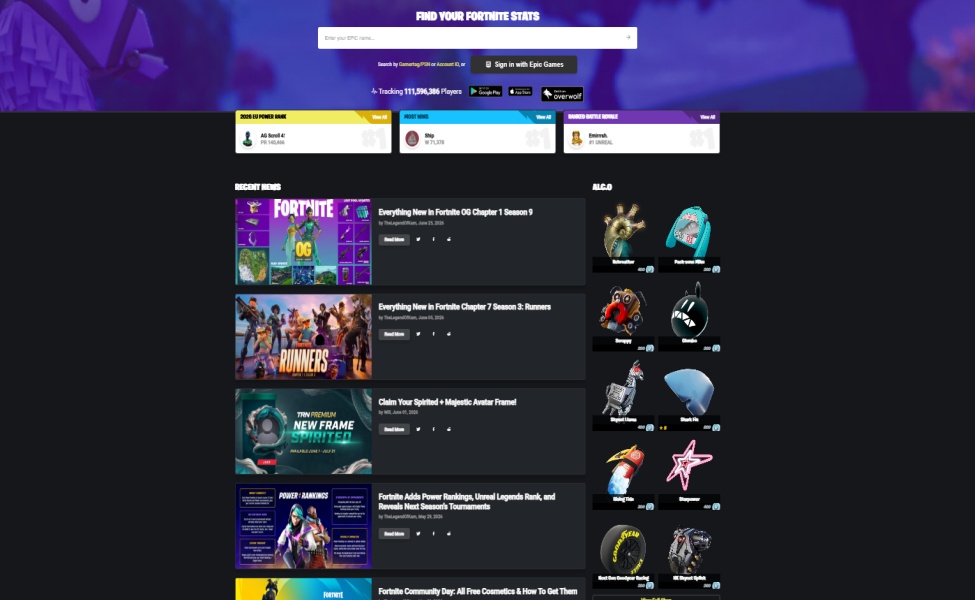
Fortnite Tracker, found at fortnitetracker.com, is part of the Tracker Network family that also covers Valorant, Apex Legends, and Rocket League.

Its core job is stats: wins, kills, top placements, streaks, highest-kill games, and season-over-season trends, all pulled from your public match history once you flip Gameplay Privacy to public in your Epic account settings.
On top of raw stats, the site runs leaderboards by region, platform, and mode, a daily Item Shop archive, and a Looking for Player board for scrims and event teammates.
There’s a desktop overlay (through Overwolf or the official tracker.gg app) that shows live in-match data and lobby info, plus a mobile app for checking your profile between matches. Most of this is free; a paid tier strips ads for a few dollars a month.
What separates it from a basic stat page is depth. Years of archived events, a real skill rating instead of just a win count, and dedicated coverage for nearly every official Fortnite tournament. That last part matters more than people give it credit for.
See Also: Typical Gamer Icon Skin Fortnite: Price, Bundle & Free
The Hidden Math Behind Your TRN Rating
TRN Rating isn’t just your win percentage dressed up. The current system is built around something Fortnite Tracker calls Epic Score, a number derived from how you performed relative to everyone else in that specific match.
Finish in the top 10% before you die or win, and your Epic Score lands around 506 or higher. Finish in the bottom 10%, and it drops to 20 or lower.
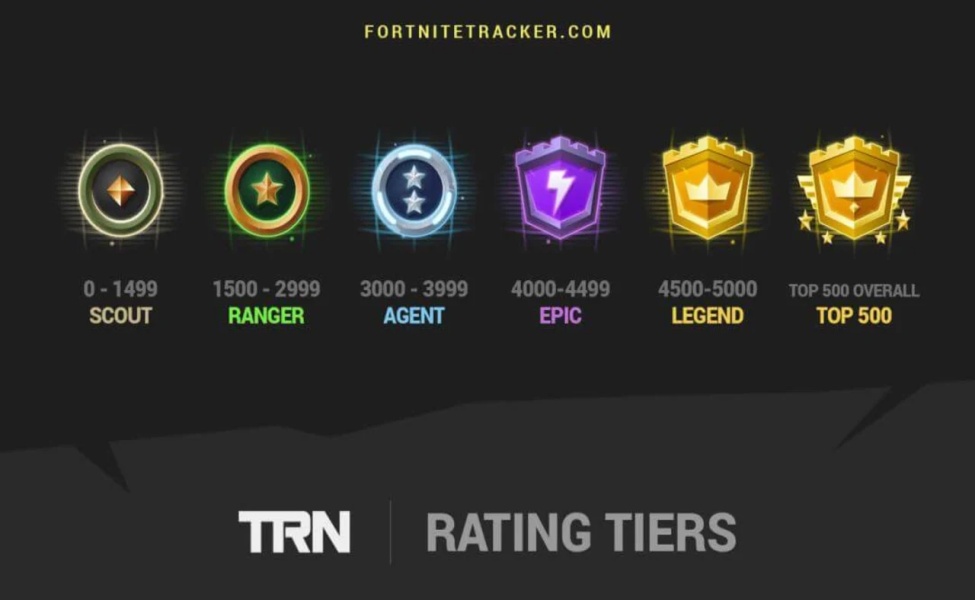
Your TRN Rating then moves based on how your Epic Score compares to what’s expected at your current rank.
A multiplier scales with rating, so the higher you climb, the more the system expects from each match. A 4,000-rated player who wins with a mediocre in-game score won’t gain nearly as much as a 1,500-rated player pulling off the same result.
This is the part most players miss when they complain that someone with worse raw stats outranks them. Raw stats measure volume. TRN Rating measures consistency against expectation, match after match.
That’s also why obsessively checking the TRN Rating of the player who just rotated you off third party is such a gamer instinct. You’re calibrating, whether you mean to or not, against your own number.
See also: Fortnite Admin Panel Codes: Complete Active List (August 2026)
Why Your Zero Build Stats Don’t Mean What You Think
Zero Build and Build mode generate separate stat lines, and that split matters more once skill-based matchmaking gets involved.
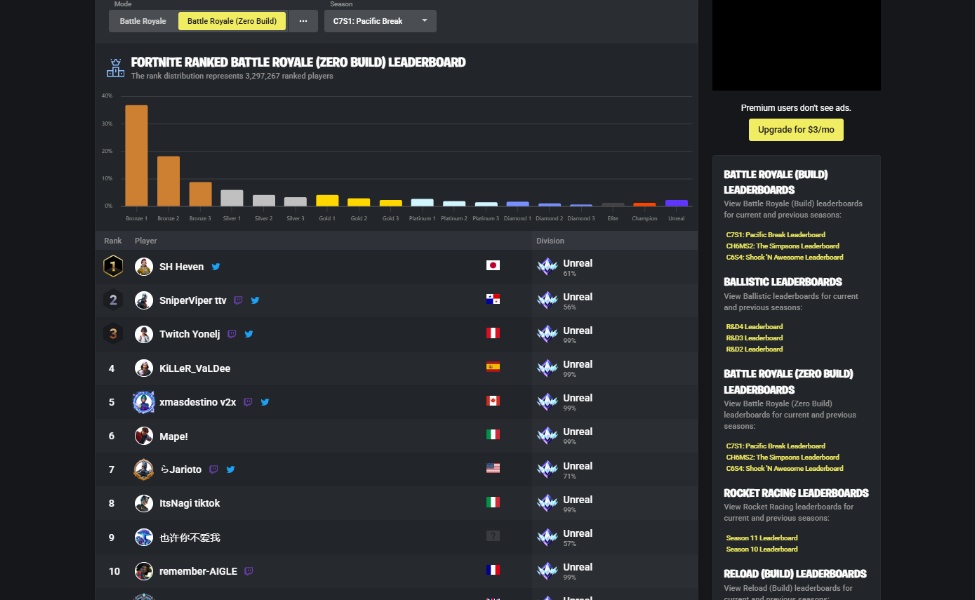
SBMM pairs you against opponents near your own performance level within each mode, which means a strong Zero Build KD doesn’t translate to anything in Build, and vice versa.
Treating them as one combined stat is the fastest way to misjudge your own level.
Match history is the actual fix here. Pull up your last twenty or so games on Fortnite Tracker and look for the pattern, not the highlight. Are you dying in the first three minutes more often than not? That’s a drop problem, not a fight problem.
Are your placements solid but your eliminations near zero? You’re surviving, not improving. The site’s trend charts make this visible over weeks instead of leaving it to memory, which is unreliable for anyone who’s tilted after a bad session.
See Also: Free Fortnite Codes May 2026: Legit V-Bucks & Skins
Fortnite Tracker Events and Why Power Rankings Matter
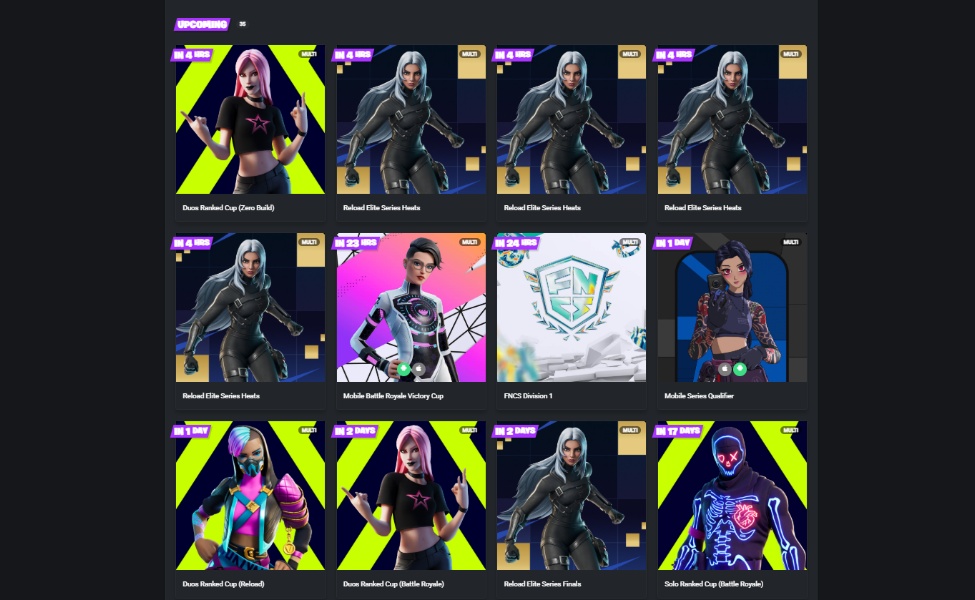
The Events hub at fortnitetracker.com/events is where the platform earns its reputation with anyone chasing competitive points.
It covers FNCS divisions, heats, and finals, Ranked Cups across BR and Zero Build, Victory Cups, Performance Evaluations, mobile series, and the rotating promotional cups Epic runs throughout the year, all broken down by region.
Power Rankings sit at the center of this. Fortnite added Power Rankings alongside the Unreal Legends Rank system, and both feed into how aspiring competitive players get noticed.
A high Power Ranking signals consistent results across multiple events, not just one good weekend, which is what scouts and team organizers look for when filling a roster spot.
For anyone not chasing a pro slot, the Events hub still has a use. Archived results let you check how a given regional cup played out, what placement thresholds ended up mattering, and how the scoring rewarded aggression versus survival.
That context turns a single event into something you can study instead of just a result you missed.
See also: Wendy Build Guide: Best Loadout in Brawl Stars
How the Pros Use Fortnite Tracker
The flex angle gets all the attention, but the practical use is scouting. Before scrims or tournament lobbies, competitive players pull opponent profiles to check recent event history, average placement, and elimination rates.
Knowing that the duo across the map has been consistently top-25 in regional cups changes how you play that fight compared to a random pub squad.
The same logic applies to self-scouting. Reviewing your own last few Ranked Cups on the platform shows whether your placement is trending up, flat, or sliding, which is a much steadier signal than how any single match felt in the moment. Adrenaline lies. A documented trend line doesn’t.
See Also: Upcoming Fortnite Skins: Leaks, Collabs, and What’s Coming Next
Fortnite x Supergirl: How the Collab Played Out

This is the intersection of Fortnite Tracker’s event coverage and the current Item Shop cycle, and the timeline moved fast enough that it deserves a clean walkthrough.
Epic and DC tied a Supergirl collab to the theatrical release of the Supergirl film, starring Milly Alcock and directed by Craig Gillespie.

The movie opened in theaters on June 25, 2026. The in-game drop followed a day later, not on the same date as some early previews suggested, which is a detail worth correcting if you saw it framed as a same-day release.
The free path ran through the Supergirl Cup on June 24 and 25. Three formats ran in parallel: Duos Battle Royale, Duos Zero Build, and a Mobile Reload Solos bracket, with placement thresholds set per region.
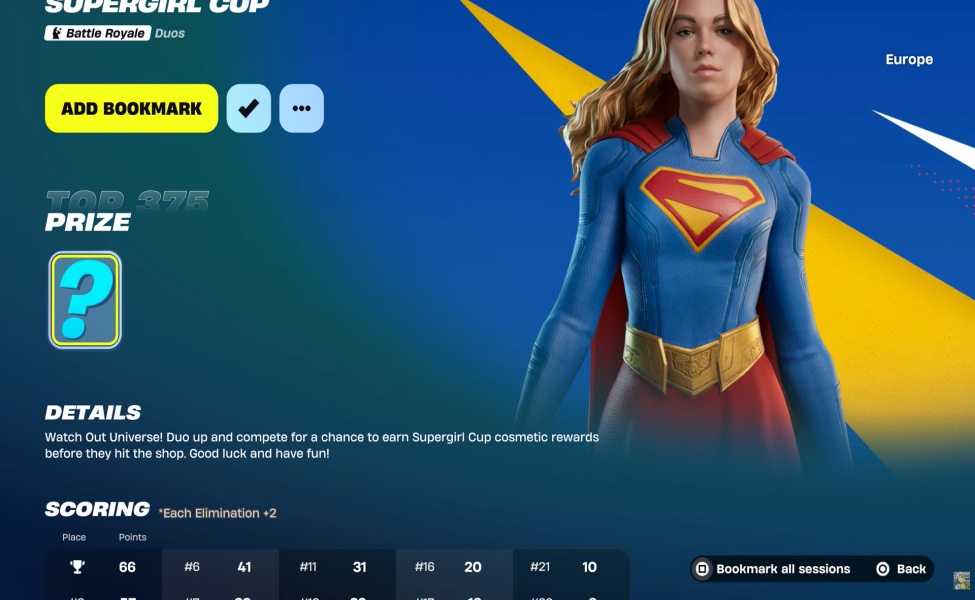
Larger regions like Europe needed a top 375 finish, North America Central sat around top 275, while smaller regions such as Oceania, Asia, and the Middle East required a top 100. Mobile brackets were tighter across the board.
Scoring rewarded both eliminations and survival, with ties broken by Victory Royale count, then average eliminations, then average placement, then total survival time.
That Cup has already wrapped. Anyone who hit their region’s threshold has the Supergirl outfit and the Supergirl’s Cape back bling sitting in their locker for free. Everyone else is looking at the Item Shop, where the full collab landed today, June 26, at 8 PM ET.
What’s in the Bundle

The confirmed lineup includes the Supergirl outfit itself, which comes with two distinct looks: the classic supersuit and a civilian variant with a trench coat, sunglasses, and headphones that leans into the film’s lighter tone.

The Cape back bling pairs with the outfit. Krypto, Supergirl’s dog, joins as a Sidekick companion item with its own animations, and it’s an Item Shop exclusive. You can’t earn Krypto through the Cup at all, no matter how well you placed.
A handful of early leaks claimed a second outfit and a doubled-up item count beyond what’s been confirmed through official previews and matching outlet coverage.
Treat those extras with caution. They came from a single low-reliability post tied to a referral code rather than corroborated reporting, and we’re not running with details that don’t show up anywhere else.
Skin Price and What to Expect from the Bundle

Epic hadn’t published official pricing as of this writing. Based on how recent DC collabs in Fortnite have been priced, expect the Supergirl outfit alone to land somewhere around 1,500 V-Bucks, with the full bundle including Krypto closer to 2,800 V-Bucks.
Treat both numbers as informed estimates rather than confirmed figures until the shop tile loads.
How to Get the Skins Now That the Cup is Over
If you missed the Cup window, the Item Shop is the only route left, and there’s no catch beyond paying for it.

Buying separately usually costs less than the full bundle, so if Krypto isn’t a priority, picking up just the outfit and cape is the cheaper play.
If you want the dog, the full bundle is the only way to get him, since he was never part of the free Cup rewards in the first place.
Is Fortnite Tracker Safe to Use
Short answer: yes, with the usual third-party caveats. Tracker Network has run Fortnite Tracker for years without a documented case of bans tied solely to using the site or its overlay.
Epic doesn’t officially endorse third-party tools, but the platform reads public stats rather than touching gameplay, which keeps it well outside the cheat and macro category that triggers ban waves.
The main thing to manage is privacy. Viewing your full profile requires setting Gameplay Privacy to public in your Epic account or signing in through official OAuth, and either choice means your stats are visible on public leaderboards.
Stick to fortnitetracker.com or the official tracker.gg apps, skip anything claiming to be a modified or cracked version, and keep two-factor authentication on your Epic account regardless of which trackers you use.
See Also: Fortnite Chapter 7 Season 2: Everything We Know So Far
Understanding exactly what Fortnite Tracker is and how to weaponize its data separates the casuals from the pros.
You can track your TRN Rating, refine your drop paths, and analyze the leaderboards of the Supergirl Cup all day long.
But pulling up to a stacked, surge-warning endgame lobby with high stats and default cosmetics is a fast way to lose the psychological battle before the first edit is made.
You need the locker to match the ELO. When that Supergirl bundle hits the shop on June 26, or when the next sweaty pickaxe rotates in, you cannot afford to be caught lacking V-Bucks.
The smartest way to secure those tryhard cosmetics fast, securely, and affordably is by topping up your account at Joytify.
Buy Fortnite V-Bucks at Joytify today, secure the sweatiest Item Shop rotations instantly, and make sure your loadout hits just as hard as your stats do.
FAQs
TRN Rating is a performance-based score calculated by Fortnite Tracker that reflects your ranked play across multiple matches. It factors in kills, placement, and overall match performance to give a more detailed picture than the in-game ranking system alone.
Yes, you can search any player's username on Fortnite Tracker to view their full stats including kill counts, win rates, and match history. This works across all platforms including PC, PlayStation, and Xbox.
The Supergirl skin was released as part of a DC Comics collaboration and was made available through the Fortnite Item Shop for a limited time. Players who missed it may need to wait for a potential re-release in a future shop rotation.
TL;DR
- Fortnite Tracker provides detailed statistics, including wins, kills, and performance trends from public match history, helping players analyze and improve their game.
- The TRN Rating system measures player performance against expectations based on match results, which differs from raw stats like win percentage.
- The Events hub tracks competitive events, power rankings, and tournament results, providing crucial information for aspiring competitive players and those studying previous events.

1 Comment
Pingback: Fortnite Admin Panel Codes: Complete Active List (August 2026)