

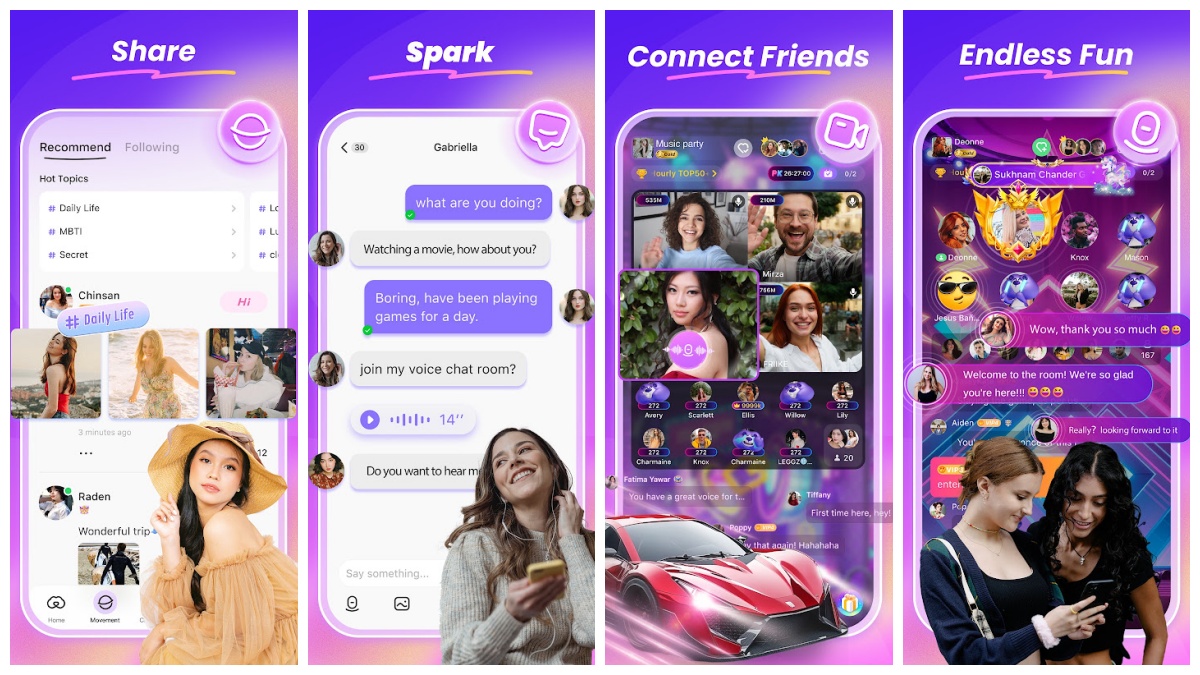
TL;DR
- SUGO is a gamified live-audio platform that operates on a two-sided tokenized economy, where users purchase Coins for gifts, while hosts earn Diamonds from user transactions.
- The app prioritizes live audio party rooms and employs strict room control mechanics, with hosts having significant power over guest interactions and room dynamics.
- To navigate SUGO effectively, beginners should adopt a strategic approach, focusing on passive observation and gradual engagement rather than impulsive spending on virtual gifts.
Disclaimer: This summary was created using Artificial Intelligence (AI)
Finding a simple, no-nonsense SUGO voice chat tutorial is tough when most articles just repeat the same generic promo lines.
But SUGO isn’t a swipe-to-match app. If you play it like one, you’ll run out of coins fast and get stuck in ghost-town rooms.
SUGO is actually a live audio hangout with its own rules, ranking systems, and virtual gifting culture. Once you know how the basics actually work, you’ll save your money and have a much better time.
What SUGO Actually Is?

SUGO has over 50 million downloads and a strict 18+ rating. If you look at the reviews, people either love it or hate it. Fans love the active late-night community, while critics hate how fast the app drains your money on virtual gifts.

It doesn’t have a normal timeline feed. Instead, everything happens in live audio rooms based on three simple rules:
- Group Audio First: It feels like a private radio lounge. Video is optional.
- Hosts Rule the Room: The room owner decides who gets to talk on stage and can easily kick out trolls.
- The Gift Economy: Regular users buy Coins with real money to send gifts, while popular room hosts collect those gifts to earn real income.
Basically, SUGO is an interactive, cash-fueled audio club. To stand out, you either need to be a great talker or a big spender.
Official Places to Download (Use These Only)
The digital-audio niche is plagued by third-party phishing campaigns, counterfeit top-up portals, and malicious APK modifications claiming to offer unlimited coin injections.
Never download secondary APK files distributed in private voice chats or unauthorized forums. Verify your client through these authenticated sources:
- Android Ecosystem: Google Play Store (Search “SUGO: Voice Chat Party” and confirm the package signature com.voicemaker.android).
- iOS Ecosystem: Apple App Store (Search “SUGO: Online Chat Party” or “SUGO-Online Chat Party”).
- Official Web & Download Hub: Direct your browser to blog.sugo.com or [blog.sugo.com/download](https://blog.sugo.com/download), cross-referencing domain roots tied to voicemaker.media.
- Verified Corporate Support Endpoints: Documented customer service routes include customer@sugo.com, support@sugo.com, SUGO@contact.com, and child-safety escalation desks at contact@sugochat.com.
Regional teams run localized community channels on Instagram, TikTok, and LINE, but treat any direct message from an unofficial “manager” promising discounted off-platform recharges as an immediate scam vector.
See Also: Onimusha: Way of the Sword Review: Issen Frame-Data & Combat
Complete Beginner Tutorial for SUGO: Voice Chat Party
The biggest mistake novices make is dropping cash on vanity frames and jumping straight onto an open microphone before understanding stage etiquette.

Veteran players rely on a proven progression path: observe in silence, contribute via text chat, take the mic for brief introductions, and only then attempt room hosting.
Account Creation and Minimalist Profiling
Account initialization takes seconds via mobile credentials or tied third-party accounts. Input a stylized alias rather than your legal identity.
Set up an illustrated or aesthetic avatar; an authentic human headshot is never mandatory. Keep your public bio spare.
Exclude employer details, exact coordinates, academic institutions, and secondary messaging handles (WhatsApp or Telegram).
Decoding the Navigation Hub
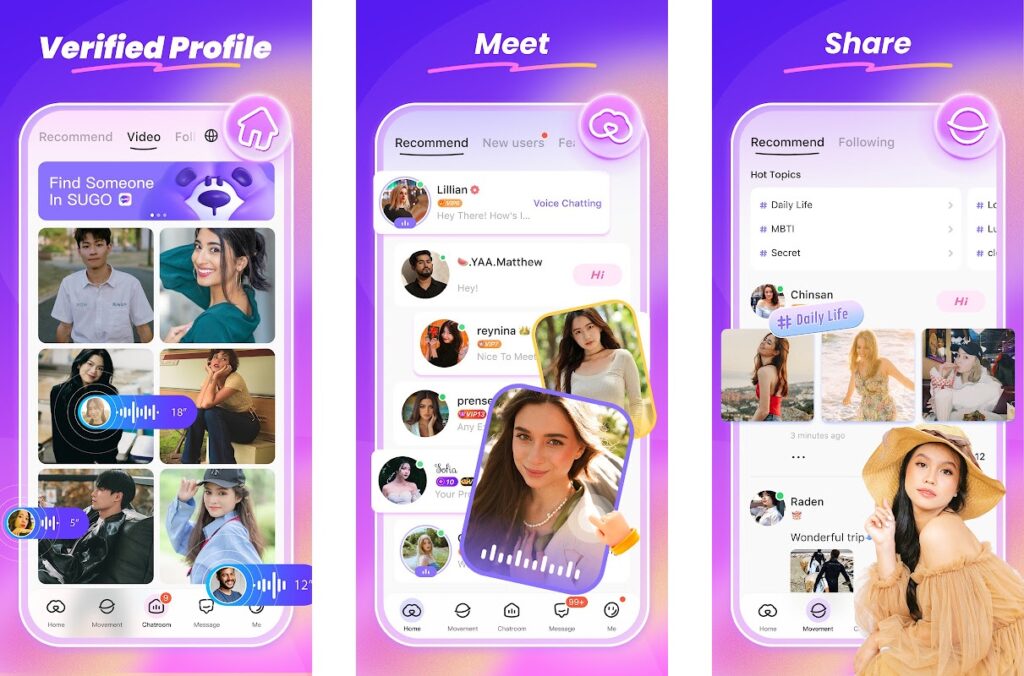
Your primary dashboard splits operational focus across five distinct tabs:
- Home / Recommend: Highlights algorithmic matching, localized room suggestions, and nearby active users.
- Rooms / Party: The core directory categorizing active voice spaces by theme, language, and ongoing events.
- Moments: Community status updates, images, and user-generated media feeds.
- Messages: Direct messaging queues, official system notices, and relationship notifications.
- Me: Your personal operational center tracking wallet balances, VIP status levels, CP intimacy progress, Club/Family affiliations, and your User ID.
The Lurker Strategy
Enter populated rooms under casual tags such as music, language exchange, or late-night talk. Keep your headset on and maintain full passive listening.
Observe the seating hierarchy, study the host’s moderation speed when trolls arrive, and note the transaction volume of virtual gifts before ever tapping a seat icon.
Text-First Interaction
Drop brief contextual messages in the public room chat. Drop simple compliments regarding the background music or chime in on the host’s topic bot query.
Establishing low-pressure familiarity in the room feed ensures your avatar is recognized before you request an active microphone.
Staging and Mic Etiquette
When requesting an open seat (typically capped at six active guest slots in standard room layouts), tap in and mute your audio instantly upon approval.
Wait for the host to pass the conversation to you. Keep your debut statement under fifteen seconds. Say hello, acknowledge the vibe, and yield the floor back to the room flow.
See Also: Argus “Raiden Maru” Skin: Lore, Visuals, Price & Best S42 Build
How Does a Live Room Work?

A SUGO voice room functions like an audio production stage governed by hard permissions, real-time visual overlays, and automated engagement tools.
The Internal Hierarchy
- The Room Owner / Host: Occupies seat one. The host dictates the background theme, locks empty seats for solo broadcasts, pins system announcements, and sets operational rules.
- Co-Hosts and Admins: Appointed lieutenants granted administrative toggles. An active co-host keeps the room protected against mic-spammers and audio trolls when the primary host steps away.
- Seated Speakers: Granted public transmission rights, limited by stage seat timers or host permissions.
- Audience Members: Lurkers tracking the room audio, driving public chat volume, and sending engagement reactions.
Host Management Arsenal
Veteran hosts maintain room discipline and climb the platform’s Hot discovery directory by rotating specific utility tools:
- Seat Locking: Halts unwanted requests, creating exclusive three-seat or four-seat panel arrangements.
- Topic Bot Invocations: Automated system prompts deployed when public room chat stalls, stimulating conversational momentum.
- Room PK Battles: Split-screen competitions against rival rooms where gift values translate directly into attack power.
- Lucky Bags: Timed coin drops funded by room VIPs to reward active listeners and drive retention numbers.
Feature Map (What Beginners Use) in SUGO App
To actually enjoy SUGO, you need to learn how to separate the fun room features from the traps designed to drain your wallet fast:
| Platform Feature | Operational Mechanics | Tactical Beginner Priority |
|---|---|---|
| Voice Party Rooms | Multi-seat real-time audio rooms with host-controlled stage queues | High: Primary venue for socialization and community networking |
| Mic Queue System | Formal request pipeline to secure an active speaking seat | Medium: Deploy only after establishing familiarity via text |
| Topic Bot Engine | System-generated conversation prompts and mini-trivia cards | Medium: Reliable icebreaker when starting your own room |
| Instant Match | Rapid 1-on-1 voice and video routing algorithm | Low: High coin expenditure; skip until familiar with platform norms |
| In-Room Chat & Direct Messages | Text channels with image exchange and gift attachment options | High: The safest avenue for building organic connections |
| Moments Feed | Public media posts displaying photos, audio snippets, and updates | Low: Useful for passive profile visibility, low daily impact |
| Virtual Gift Engine | Tiered animated assets purchased with user coins | Optional: Reserve for deliberate host support, avoid blind gifting |
| Family / Club Guilds | Collective host organizations tracking aggregate room performance | Later Stage: Essential if pursuing host agency contracts |
| Room Mini-Games | Embedded randomized luck mechanics and dice games | Avoid: Highly volatile coin-sink systems |
| Nobility & VIP Levels | Spend-indexed status system granting custom chat bubbles and mounts | Ignore: Pure status vanity; offers zero core functionality to newcomers |
Coins, Diamonds & Gifts in SUGO
The monetary pipeline on SUGO is divided into two distinct channels: user consumption tokens and host earnings units. Failing to separate the two leads directly to buyer remorse.
- Coins: The outgoing retail currency. You purchase coins with fiat payment methods via official app store rails. Coins fund gift drops, profile entrance animations, custom bubble fonts, and private messaging actions.
- Diamonds: The creator revenue credit. When a user sends a virtual gift, the platform clips an operational infrastructure fee before crediting the host’s wallet with Diamonds. Accumulated Diamonds can be cashed out once hosts satisfy specific threshold requirements, identity checks, and agency milestones.
- In-App Event Credits: Promotional points awarded during holiday drives and seasonal challenges. These are non-withdrawable units reserved for limited-time platform badges.
The Gift Tier Ladder and Room Visibility Engine
Virtual gifts range from standard entry stickers (low coin costs) to screen-engulfing supercars, luxury yachts, and animated castles.
In SUGO, sending a massive animated gift is not merely a visual gesture; it triggers a room-wide alert system. High-value gift drops blast dynamic banner notifications across adjacent rooms, drawing traffic directly into the host’s channel.
Furthermore, platform algorithms heavily weight rapid gift consumption velocity when sorting the Hot discoverability tab. Rooms with active gift exchanges jump directly to the top of the feed, unlocking waves of organic traffic.
How Couples (CP) and VIP Status Work
The CP (Couple) system lets you link your account with a friend or partner. You level up your “intimacy” just by hanging out in rooms together, sending messages, and trading gifts. Hit the top levels, and you unlock cool rewards like animated rings, matching profile borders, and flashy room entrances.
On the flip side, VIP and Nobility subscriptions are monthly paid tiers. If you buy the highest SVIP level, entering a room triggers a massive, screen-shaking animation that forces everyone to notice you.
But it’s all just for show. Paying for a high VIP level won’t keep your room busy if you are a boring host, let trolls ruin the chat, or can’t stick to a regular streaming schedule.
See Also: MLBB 10th Anniversary: Confirmed Date, Free Skin & All Changes
Safety, Rules, and What Gets You Banned
SUGO operates under a strict 18+ user mandate, maintaining zero tolerance for underage accounts, sexual exploitation, or deliberate identity falsification.
Child safety infractions trigger immediate, permanent hardware-level bans, paired with incident logging forwarded to monitoring bodies such as NCMEC.
- Adult Content in Live Rooms: Broadcasting explicit audio, camouflaged adult services, or provocative video frames during 1-on-1 matches results in swift account termination.
- Unauthorized Financial Arbitrage: Promoting third-party coin top-ups, account trades, or unauthorized currency exchange in room banners will trip automated moderation bots.
- Doxxing and Recording: Capturing private voice sessions, leaking personal data, or recording user audio without consent violates platform security standards.
- Emulators and Automation: Deploying desktop emulation environments, farming bots, or aggressive VPN tunnels to manipulate regional coin rates regularly flags account integrity checks.
If hit with a moderation strike, file an appeal through formal in-app support channels within the standard 30-day window.
Third-party actors claiming they can manually unban accounts for a fee run simple credential scams.
What Real Users and Communities Say
If you look at app store reviews, community forums, and tips from veteran hosts, you’ll notice a massive divide in what users actually think:

The Positive Community Perspective
- Low Performance Anxiety: Lurking as a silent listener (“kikisenshu” in East Asian gaming communities) is socially accepted. You can unwind in an active room without turning on a camera or unmuting your microphone.
- Dynamic Social Audio: The presence of live human voices, ambient background music, and fast-moving room chat makes the platform significantly more spontaneous than static text platforms.
- Legitimate Creator Side-Hustles: Dedicated hosts aligned with structured talent agencies generate consistent supplemental revenue by hitting weekly broadcast quotas and nurturing loyal gifter networks.
The Critical Community Perspective
- Rapid Paywall Triggers: Moving too quickly into private direct messages often hits system payment prompts, creating friction for users expecting unrestricted free messaging.
- Presence of Commercial Accounts: Certain profiles operate on scripted response loops designed to pull visitors into high-cost 1-on-1 private calls or extract rapid gift drops.
- High Churn in Public Spaces: Without vigilant room co-hosts, public stages can quickly be hijacked by disruptive noise-makers, highlighting the necessity of active moderation.
SUGO thrives as an interactive audio club governed by a transparent cash economy. Users who step in expecting a traditional dating portal end up disappointed; those who embrace it as an interactive audio venue discover an engaging digital hangout.
A Beginner Playbook That Works
Take it slow. Below is a proven step-by-step plan to figure out the app without spending a single coin during your first few days.
Your First Night:
- Keep It Anonymous: Pick a cool nickname and an avatar. Do not put your real personal info in your bio.
- Be a Ghost: Hang out quietly for 10 minutes in three different rooms (try a casual chat, a music room, and a big family room).
- Read the Vibe: Watch how the host acts. Are people actually having fun chatting, or is the host just begging for expensive gifts?
- Follow the Good Ones: Bookmark one or two chill hosts who actually manage their rooms well.
Your First Week:
- Become a Regular: Go back to the same rooms at the same time every night. You will make friends much faster this way than by jumping around randomly.
- Speak Up (A Little): Start by chatting in the text box. If the host invites you to the mic, accept it, say a quick 10-second “hello,” and then go back to listening.
- Ignore “Instant Match”: Stick to public group rooms. The private matching feature is usually just a trap to drain your coins fast.
- Keep It in the App: If someone immediately asks for your WhatsApp or Instagram within minutes of meeting, say no. Keep your chats safely inside SUGO until you actually know who you are talking to.
See Also: Is ANANTA Out? Combat, Cities & Release Breakdown
Using a real SUGO voice chat tutorial for beginners puts you way ahead of the crowd. It helps you figure out the room rankings, dodge those expensive coin traps, and run your audio rooms with zero stress.
So, what CP level have you reached so far? Do you think buying that top-tier VIP status is actually worth the money for getting more listeners? Or is it better to just stream at the same time every day and kick out the trolls to keep your room alive? Let us know in the comments!
FAQs
Beginners should focus on joining existing rooms rather than creating their own, since hosting costs more coins over time. Participating actively in conversations and earning engagement rewards is a more sustainable way to maintain your coin balance than spending on features before you understand the platform.
SUGO is a live audio hangout platform, not a matchmaking or dating app, so interactions happen in real-time voice rooms rather than through profile browsing. This means the social dynamics, etiquette, and coin economy are built around group conversation and audio engagement rather than individual profile matching.
New users should start by listening in public rooms before speaking to get a feel for community norms and avoid unwanted attention. Never share personal information like your real name, location, or contact details in voice rooms, and use the block and report features if another user makes you uncomfortable.
TL;DR
- SUGO is a gamified live-audio platform that operates on a two-sided tokenized economy, where users purchase Coins for gifts, while hosts earn Diamonds from user transactions.
- The app prioritizes live audio party rooms and employs strict room control mechanics, with hosts having significant power over guest interactions and room dynamics.
- To navigate SUGO effectively, beginners should adopt a strategic approach, focusing on passive observation and gradual engagement rather than impulsive spending on virtual gifts.